Communications
Pioneering 6G Spectrum Exploration: Outdoor Field Test for Extreme-MIMO in the 7 GHz Band
1. Introduction
The wireless industry stands at a critical juncture as we begin preparing for the transition from 5G to 6G. With global mobile data traffic projected to grow exponentially in the coming years, the need for new spectrum bands has never been more pressing. At Samsung Research, we are pushing the boundaries of wireless technology through our 6G research and development, with a particular focus on exploring the potential of higher frequency bands than 5G with cutting-edge Multiple-input Multiple-output (MIMO) technologies. For further information, interested readers can refer to our previous blog [1]). In this technical deep dive, we share our groundbreaking outdoor field trial in the 7 GHz band, marking a significant milestone that brings us one step closer to realizing the full potential of 6G.
Our recent field trial represents more than just a technical achievement – it is a crucial step in validating the feasibility of using the 7 GHz band for future mobile communication systems. This band offers an attractive balance between capacity and coverage, potentially serving as a key enabler for the ultra-high-speed applications that will define the 6G era. In this blog, we introduce our Proof-of-concept (PoC) test setup for the field trial, share our key findings, and discuss the implications for the future of wireless communication.
2. 6G PoC Hardware Platform
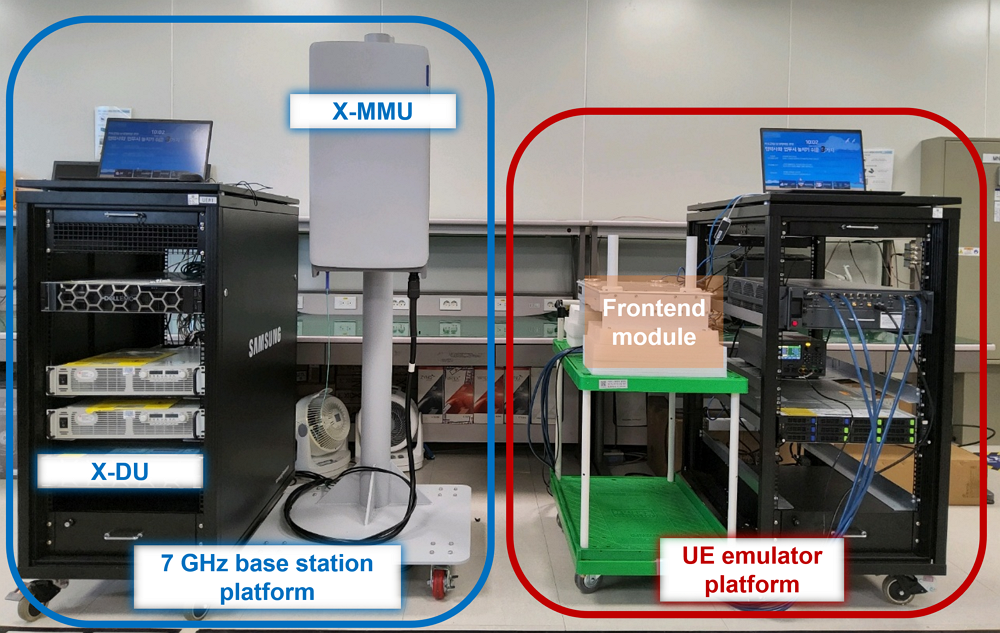
Figure 1. 6G PoC hardware platform for 7 GHz outdoor test
In this section, we introduce our 6G PoC hardware platform. As shown in Figure 1, our platform consists of a prototype base station platform and User Equipment (UE) emulator platform, operating in 7 GHz frequency band.
2.1 Base Station Architecture
One of the critical components for the field trial is a cutting-edge radio unit, specifically designed to explore the new frontier of mobile communication in the 7 GHz band. We call this advanced radio unit “eXtremely large Massive MIMO Unit (X-MMU)”, which features 256 digital ports and 1024 antenna elements, and it enables unprecedented spatial multiplexing and beamforming capabilities. This eXtreme MIMO (X-MIMO) configuration allows us to create highly directional beams that can simultaneously serve multiple users while maintaining strong signal quality, overcoming the higher path loss in the 7 GHz band compared to the lower frequency bands used in 5G.
To ensure seamless operation, we integrated the X-MMU with a Distributed Unit (DU) emulator, referred to as X-DU, which handles real-time baseband processing. This complete system architecture allows us to validate not just the RF performance, but also the new 6G air interface design.
Operating in the 7.125 - 7.325 GHz range, our system supports a 100 MHz bandwidth channel, providing sufficient capacity for high-speed data transmission. With an Effective Isotropic Radiated Power (EIRP) of about 85 dBm, the X-MMU can maintain strong signal strength over considerable distances. This is particularly important in the 7 GHz band, where higher frequencies traditionally face greater propagation challenges.
One prominent feature of X-MMU is its high capacity single-user MIMO configuration, supporting 8-layer downlink transmission with peak data rate exceeding 3 Gbps. This represents a significant leap forward in spectral efficiency. For multi-user MIMO, the system scales remarkably well, supporting up to 64-layer downlink transmission and 16-layer uplink reception, capable of delivering an impressive 24 Gbps peak downlink data rate per cell.
2.2 UE Platform Development
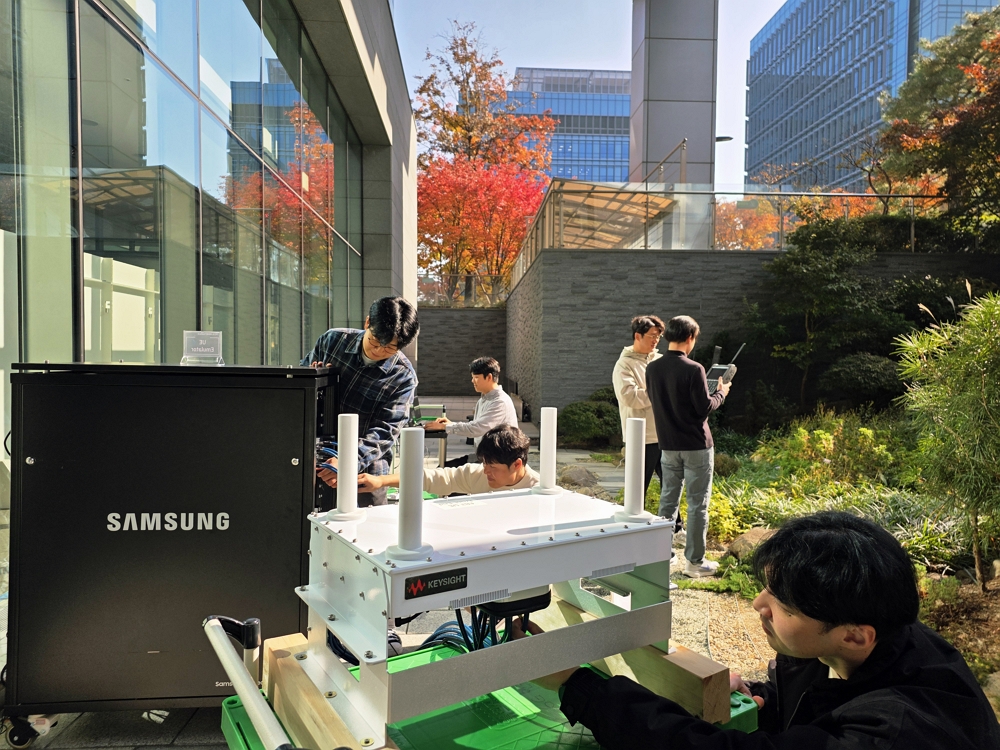
Figure 2. UE emulator platform operating in 7 GHz with 8 digital ports
Recognizing the importance of comprehensive end-to-end over-the-air testing, we partner with Keysight Technologies to develop a specialized UE emulator for the 6G trials, as shown in Figure 2. The UE emulator features 8 receive antennas, which are mapped 1-to-1 to 8 digital ports, enabling it to support 8-layer downlink reception, i.e., the 8-level MIMO, a critical capability for evaluating the performance of our X-MIMO system. The platform implements key physical layer functionalities specifically designed for 6G operation in the 7 GHz band, including advanced transport block processing and reference signal structures as part of our 6G air interface design for PoC.
What makes this emulator particularly valuable is its ability to measure real-world channel conditions in the new spectrum band. By incorporating sophisticated receiving algorithms and supporting dynamic beam tracking, we are able to thoroughly evaluate the robustness of our 6G design under various wireless channel conditions. This UE platform plays an indispensable role in our field trials, providing detailed performance metrics and helping us identify areas for optimization of the new 6G air interface design.
3. Field Test Setup and Deployment
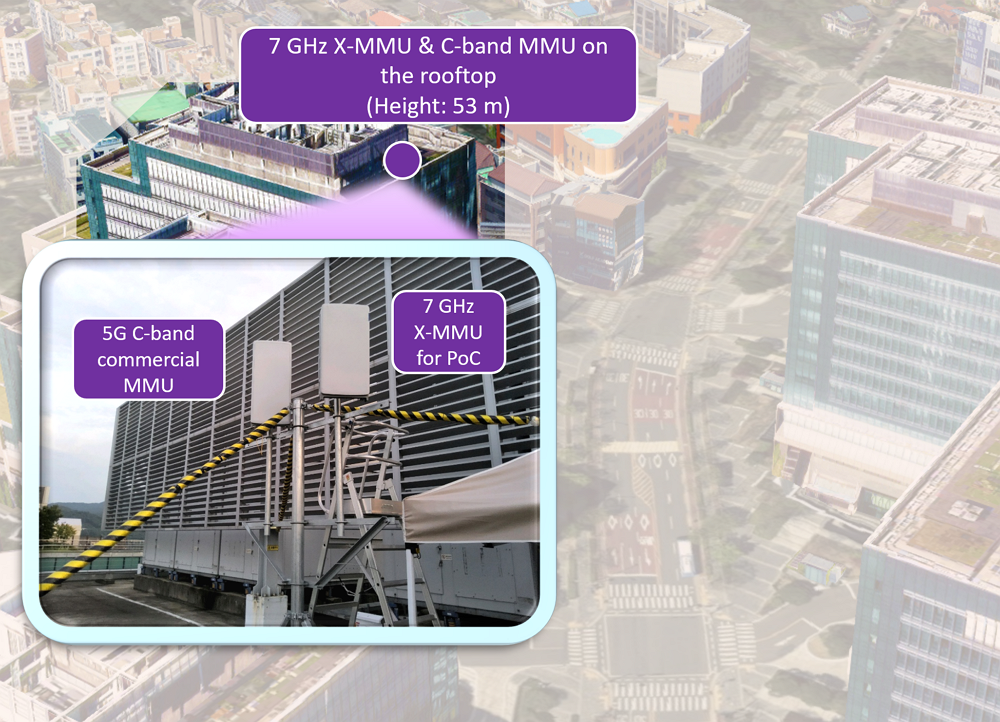
Figure 3. Field test environment at Samsung Seoul R&D campus site
To validate our 6G technology in realistic conditions, we conducted extensive field testing at Samsung Research's Seoul R&D campus site. The location provides a representative urban environment with a mix of line-of-sight (LOS) and non-line-of-sight (NLOS) propagation scenarios.
As can be seen from Figure 3, we install our X-MMU on the rooftop of one of the campus buildings, positioning it at a height of approximately 50 meters above ground level. This elevation allows us to simulate urban base station deployment scenarios while providing coverage to both outdoor and indoor areas. The X-MMU is configured with a proper downtilt angle to optimize coverage across the test area. Furthermore, we also mount a commercial radio unit for 5G massive MIMO (called MMU) operating in the 5G C-band, for the purpose of coverage performance comparison with our 7 GHz base station.
Our test setup includes multiple measurement points strategically located throughout the campus, with outdoor locations at varying distances from the base station (i.e., ranging from 50 to 300 meters). Moreover, we also select indoor locations for measurement in different types of buildings in the campus (i.e., concrete structures and glass-fronted offices areas). We employ a comprehensive measurement methodology including throughput testing to validate data performance of the new spectrum under various MIMO configurations, as well as the synchronization signal measurements to evaluate link quality and coverage.
This rigorous test setup allows us to collect extensive data about how the 7 GHz band behaves in real-world conditions, providing valuable insights for future network planning and optimization.
4. Capacity Performance: Pushing Data Rate Boundaries
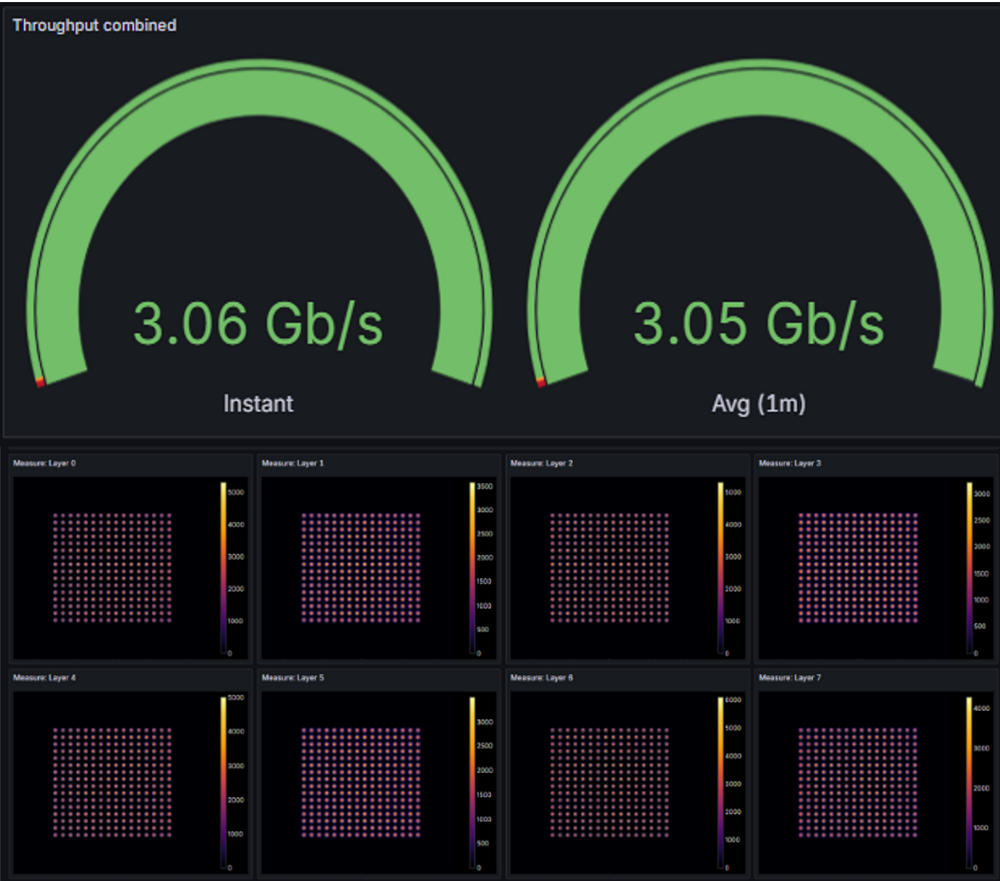
Figure 4. Capacity measurement result of downlink 8-level MIMO for a single-user in 7 GHz
The capacity results from our field trial demonstrated the significant potential of the 7 GHz band for 6G. Our most significant achievement was the successful demonstration of 8-level MIMO in the downlink, i.e., simultaneously transmitting 8 data streams (i.e., 8 layers) over-the-air, together with the modulation order of 256QAM, reaching a peak data rate higher than 3 Gbps. In Figure 4, we demonstrate the measurement result of the downlink data rate measured at the UE emulator side, showing 3.06 Gbps of data rate and also the constellation plot of 8 data streams each with 256QAM, achieved at a location with NLOS channel condition and about 100 m distance from the base station.
What makes this achievement particularly impressive is that it was accomplished using a single 100 MHz channel, an unprecedented result in commercial 5G systems. When we consider that future 6G networks will likely adopt larger bandwidth, the potential data rates become truly staggering. Furthermore, our tests showed that the system could maintain this high performance across multiple locations within the coverage area, demonstrating consistent capacity delivery in the new spectrum band. This level of capacity could support, for instance, dozens of simultaneous 4K video streams at home in, e.g., 6G FWA services supported by CPEs equipped with a large number of antennas, illustrating how 6G in the 7 GHz band could meet the demands of future data-intensive applications.
It is also worth noting that advanced beamforming and precoding techniques we used for the X-MIMO system demonstrates how effectively the large scale MIMO system could operate in the new frequency band. The results shows excellent beamforming performance, enabling efficient spatial multiplexing even in challenging propagation environments. This capability will be crucial for supporting the dense user environments requiring tremendous amount of traffic expected in future 6G networks.
5. Coverage Performance: Bridging the Gap with 5G
Another primary objective of our field test is to evaluate how coverage in the 7 GHz band compares to the existing 5G mid-band spectrum. Using Keysight's FieldFox measurement device, capable of receiving Synchronized Signal Block (SSB), we conducted extensive Reference Signal Received Power (RSRP) comparisons between our 6G system operating at 7 GHz and a reference 5G system operating in the C-band (around 3.8 GHz), as an initial step of thorough coverage verification in the field. As shown in Figure 5, we conducted field measurement for SSB RSRP at various outdoor/indoor locations around our Samsung Seoul R&D campus.
This initial outdoor coverage measurement results are quite encouraging. We found that with common single-beam based SSB RSRP measurement for both 6G 7 GHz and 5G C-bands, the median gap of SSB RSRP is about 5.72 dB; this shows a potential of 7 GHz band towards achieving similar level of coverage with 5G C-band, i.e., with proper beamforming and our high-power radio design, the 7 GHz system could achieve coverage distances similar to the 5G C-band system in outdoor-to-outdoor conditions. This also demonstrates that with appropriate system design and advanced beamforming techniques, the higher frequency does not necessarily mean significantly reduced coverage.
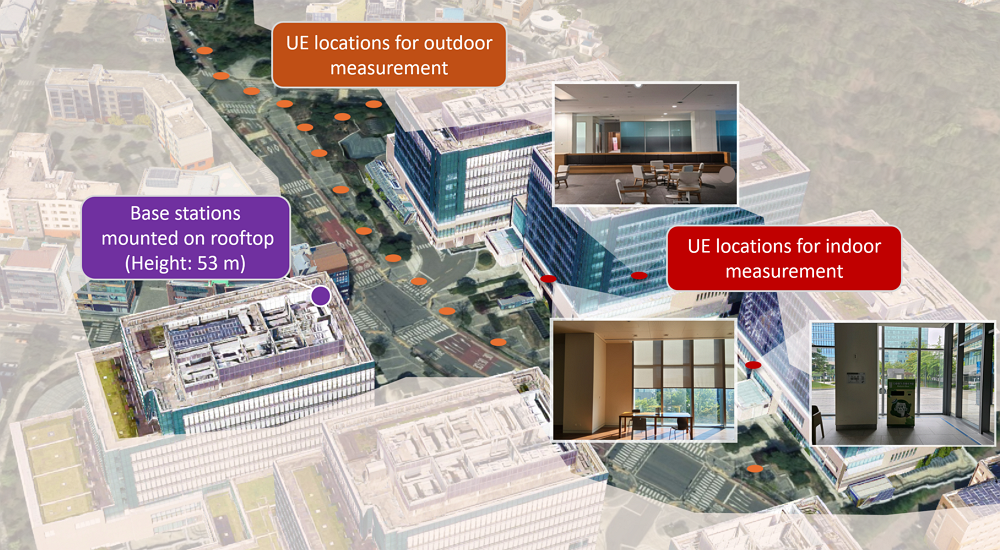
Figure 5. Coverage measurement environment comparing SSB RSRP between 7 GHz and C-band
6. Conclusion and Future Outlook
Our successful field trial in the 7 GHz band marks a significant milestone in 6G research and development. The results demonstrate that this frequency range can support both high capacity and reasonable coverage distances, making it a strong candidate for future 6G spectrum allocations. The achievement of 3 Gbps peak data rate in a single 100 MHz channel with 8-level MIMO, along with coverage potential of the 7 GHz band, shows the tremendous potential of this band to meet the growing demands for mobile data traffic.
On the other hand, the challenges identified in indoor coverage and signal penetration will require innovative solutions as we continue to refine our 6G technology. We are particularly excited about exploring advanced antenna technologies and AI-driven network optimization techniques to address these challenges.
Looking ahead, we believe the 7 GHz band could play a pivotal role in the 6G ecosystem, potentially serving as a capacity layer for urban and dense urban deployments, and a backbone for fixed wireless access applications. We plan to continue our exploration of this new spectrum band with more advanced field trials, which will provide more valuable insights in future commercial 6G network design.
References
[1] Gary Xu et al, “Upper mid-band spectrum for 6G: opportunities and key enablers”, Samsung Research Blog, Aug. 2024. [Online]. Available: https://research.samsung.com/blog/Upper-Mid-Band-Spectrum-for-6G-Opportunities-and-Key-Enablers#none