Communications
Integrated Sensing and Communication (ISAC): New Monetization Opportunities for 5G and Beyond
Introduction
Wireless RF (Radio Frequency) sensing represents a transformative technology that utilizes radio waves to monitor and detect changes in the physical environment without physical contact. Although it has numerous applications across various fields, including military applications, navigation, weather forecasting, smart home automation, health monitoring etc., a key hinderance for the mass-market adoption of the technology was the need for dedicated sensing hardware. To address this limitation, recent industry efforts have focused on repurposing existing communication hardware (e.g., cellular or Wi-Fi) to perform sensing, a concept known as integrated sensing and communication (ISAC) [1-3]. In fact, the demand for higher spectral efficiency has led to the deployment of sophisticated communication hardware today that support higher bandwidths, e.g., millimeter-wave (mmWave) frequencies, and multiple input multiple output (MIMO) technology. Such hardware is ideally suited to provide good range and angular resolution, which are key requirements for wireless sensing. By leveraging the widely deployed 5G infrastructure for sensing purposes, this approach enables ubiquitous sensing coverage and facilitates mass market adoption of RF sensing technology.
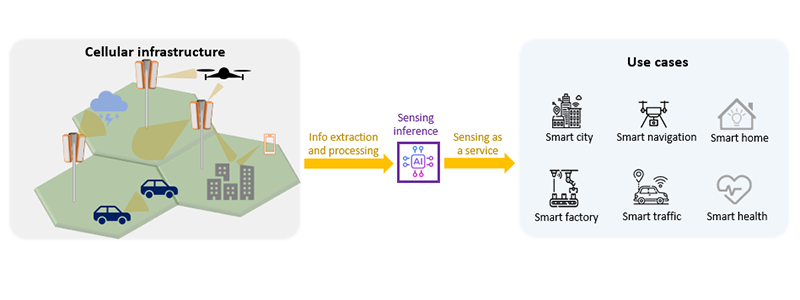
Figure 1. Wireless RF sensing as a new service offered by 5G communication infrastructure
ISAC is emerging as a key enabling technology for beyond 5G systems, offering significant advantages that extend well beyond traditional communication capabilities. This innovative technology enables operators to provide sensing inference as a service as shown in Fig. 1, creating new revenue streams in an era where communication requirements for many applications and subscriber counts are reaching saturation. By adding sensing functionality to existing networks, ISAC can drive demand for next-generation communication hardware, while simultaneously opening up valuable monetization opportunities for service providers. Beyond commercial benefits, ISAC also enables situational awareness while maintaining critical protection of civil liberties and individual anonymity. The technology can support a diverse range of applications, from smart home automation and health monitoring to autonomous driving, public safety initiatives, and disaster response operations. Leveraging the globally ubiquitous deployment of cellular infrastructure, ISAC facilitates new paradigms for omni-present and widespread situational awareness, which is particularly crucial for public safety scenarios where real-time environmental monitoring can be lifesaving.
ISAC aligns perfectly with the vision of 6G networks as enablers of new monetization opportunities for operators while simultaneously addressing pressing societal needs [2-3]. The technology's far-reaching implications for public safety, urban resilience, and national security underscore its strategic importance in maintaining technological competitiveness on the global stage. Consequently, there has been a significant surge in interest in ISAC systems across both industry and government sectors [4]. In this blog, we introduce different flavors of ISAC systems currently being considered, summarize ongoing industry efforts to enable deployment of the technology, examine potential use cases, and discuss future research directions. We also discuss key incubation efforts from Samsung towards the development of the technology.
Key design principles and features
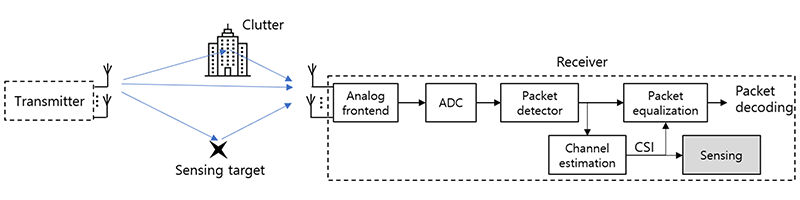
Figure 2. An illustration of operation at a communication receiver for enabling RF sensing
ISAC operates by utilizing a communication transmitter (TX) to send communication and/or sensing signals, and a receiver (RX) which captures the signals to estimate variations in the channel between the TX and RX. These variations are then used to perform sensing operations, creating a seamless integration of communication and sensing functionalities, as shown in Fig. 2.
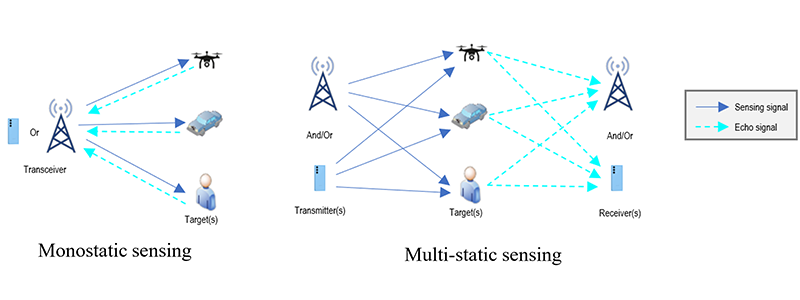
Figure 3. Types of ISAC deployments
ISAC systems may employ different sensing deployments, primarily categorized into monostatic and multi-static configurations, as shown in Fig. 3. Monostatic sensing involves colocated TX and RX on the same device, while multi-static sensing utilizes non-colocated TX and RX units. Multi-static sensing can further operate in three distinct modes: downlink mode where the base station (BS) serves as the TX and user equipments (UEs) acts as RXs, uplink mode where the UEs function as the TX and BS serves as an RX, and BS-to-BS sensing where both TX and RX are non-colocated base stations. ISAC systems may also operate in either the FR1 frequency band (sub-7.125GHz frequencies) or the FR2 band (above 24GHz). Each of these bands is suitable for unique use cases, thanks to the differing transceiver parameters and propagation characteristics applicable at these bands. The key advantages of these different sensing modes are described below:
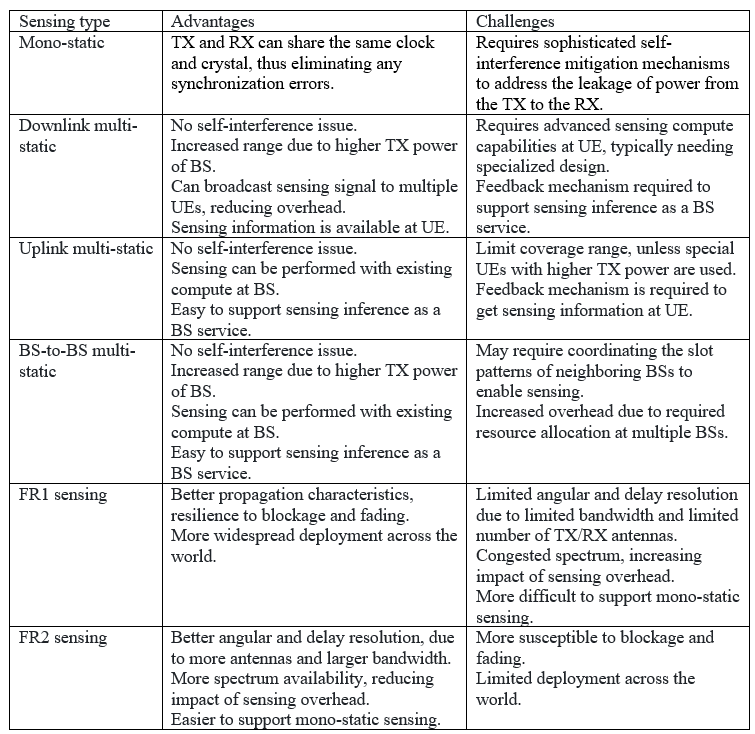
Table 1. Advantages and Challenges of different ISAC sensing deployments
In addition to the above, another key feature of ISAC systems is the level of integration between sensing and communication functionalities, specifically whether they only share common hardware or if the same signals and resources are utilized by both functions. Early deployments of ISAC technology are likely to implement only hardware sharing while scheduling dedicated resources for sensing signals. More advanced implementations may explore the re-use of the same signals for both sensing and communication purposes, representing a higher level of integration with the promise of reducing sensing resource overhead.
Cellular standards activity on ISAC
The standardization of ISAC within the 3rd generation partnership project (3GPP) began in February 2022 with the goal of enabling sensing services using 5G New Radio (NR) infrastructure. The initial efforts in the Service & System Aspects (SA) Working Group 1 focused on defining use cases and requirements for ISAC, encompassing both network-based and UE-based sensing capabilities [6]. This foundational study identified key use cases and potential requirements for enhancing the 5G system to provide ISAC services across various target verticals and applications. Building on this groundwork, a channel modeling study was initiated in December 2023 within the RAN1 working group to establish channel models for evaluating sensing use cases. This comprehensive study [7] concentrated on defining channel modeling for object detection and tracking, targeting diverse objects including unmanned aerial vehicles (UAVs), humans, vehicles, and hazardous items across six sensing modes and frequencies ranging from 0.5 to 52.6 GHz. The research aimed to identify deployment scenarios and refine existing 3GPP models by incorporating critical aspects such as radar cross-section (RCS), mobility, and spatial consistency.
It is important to note that the existing 5G standard can support ISAC capabilities, albeit potentially requiring firmware or hardware modifications, by re-using 5G-defined reference signals including demodulation reference signal (DMRS), sounding reference signal (SRS), channel state information reference signal (CSI-RS), and positioning reference signal (PRS), as sensing signals. Several proof-of-concept demonstrations have already been successfully showcased using such architectures by both academic institutions and industry partners [8].
The support for ISAC is expected to advance significantly in future standards, particularly 5G Advanced and 6G. 5G Advanced (Release 20) is anticipated to support BS monostatic sensing and potentially BS-to-BS bi-static sensing for UAV detection using existing NR waveforms.
The 3GPP 6G workshop in March 2025 emphasized 6G's role in enabling advanced services such as ISAC, extended reality (XR)/immersive communication, and artificial intelligence (AI)-driven applications. A significant milestone was reached at the recent 3GPP RAN #108 meeting in June 2025, where ISAC was officially included in the scope of study for 6G radio, establishing ISAC as a "Day 1" feature for 6G.
ISAC is envisioned as a core component that will enhance 6G network capabilities by providing a framework for integrating communication and sensing tasks. Looking ahead, 6G is expected to explore new use cases, develop novel sensing waveforms, implement mechanisms for adaptive and flexible scheduling of sensing resources, and potentially introduce multi-BS coordination to reduce sensing interference. Additionally, 6G will likely support multi-static sensing with UE involvement, further expanding the possibilities for ISAC systems.
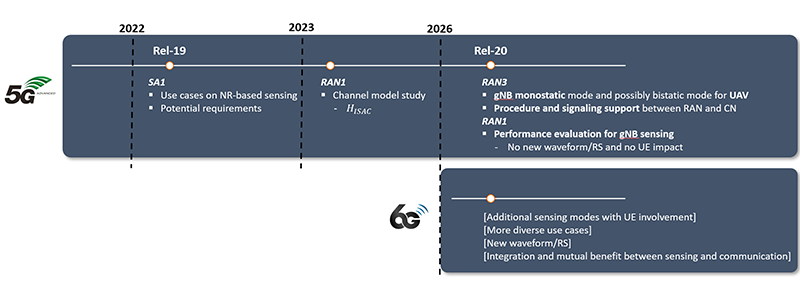
Figure 4. A timeline of 3GPP activities associated with ISAC
Key use cases
ISAC can address diverse target verticals and applications, including autonomous/assisted driving, vehicle-to-everything (V2X) communication, UAVs, three-dimensional map reconstruction, smart cities, smart homes, industrial factories, healthcare, and the maritime sector. In fact, 3GPP in its report has examined a wide range of applications, which include the following [6].
• Object detection and tracking represents a fundamental ISAC capability with applications spanning intruder detection in smart home, highway, railway, and industrial environments. This category also encompasses UAV detection and tracking, as well as crowd monitoring and tracking for public safety and event management.
• Transportation and navigation applications leverage ISAC for enhanced safety and efficiency in mobility systems. These include collision avoidance and trajectory tracking for UAVs, vehicles, and autonomous ground vehicles (AGVs), as well as automotive maneuvering and navigation assistance. Additional applications in this category include parking space determination and other location-based services that enhance the driving experience.
• Environment monitoring use cases utilize ISAC for broader situational awareness and public safety. Applications in this category include rainfall and flood monitoring for disaster preparedness, public safety and rescue operations, smart agriculture for crop management, and immersive experiences that blend digital and physical environments.
• Human-centric sensing applications focus on personal and healthcare monitoring, including health and sports monitoring, activity recognition, and gesture recognition. These applications demonstrate ISAC's potential to enhance quality of life through continuous, non-intrusive monitoring of human activities and vital signs.
In particular, ISAC can enable a range of business-to-government (B2G) use cases that enhance public safety and national security. As an example, prompted by the recent UAV incursions and attacks across the globe that have highlighted the vulnerabilities of conventional defense systems, UAV detection is expected to be one of the first ISAC use cases to be supported in 5G Advanced systems [9]. For this use case, ISAC, with its wide coverage, can serve as an effective umbrella sensing technology, functioning as an "early warning system" against UAVs that can trigger advanced radar systems. Additionally, ISAC can "fill the gap" in coverage blind spots left by other conventional sensing systems, providing comprehensive protection against aerial threats. Other examples include monitoring crowd movements to prevent stampedes or other emergencies in high-density areas and providing advanced surveillance and threat detection capabilities for critical infrastructure and public spaces. These applications demonstrate ISAC's potential to become a cornerstone technology for modern security frameworks that require both communication and sensing capabilities.
Key challenges and research directions
Although there is a strong potential and significant industry and government interest in ISAC, several key technical challenges must be addressed before practical deployment of these systems can be realized. These challenges are currently being actively researched by both academic and industry partners.
Mono-static sensing: Current deployments of FR1 and FR2 telecommunication infrastructure only support half-duplex operation, and thus cannot natively support monostatic sensing. This constraint arises from the leakage of transmit signals from the TX to the RX, which can overwhelm the much weaker sensing echoes. To overcome this limitation, novel hardware and signal processing innovations are required. Key research directions in this area include the design of self-interference cancellation components that can be integrated between TX and RX panels to mitigate signal leakage. Another approach involves reducing the duration of transmit waveforms to minimize their temporal overlap with sensing echoes. Additionally, researchers are exploring the design of new waveform and receiver architectures that are inherently tolerant to self-interference, such as frequency-modulated continuous wave (FMCW) systems [2,8].
Multi-static sensing: Bi-static and multi-static ISAC systems suffer from synchronization errors between the TX and RX which can corrupt and degrade sensing [2,10]. In particular, they suffer from carrier frequency offset (CFO), symbol timing offset, phase offset, and variation in the automatic gain control (AGC) gain at the RX, which cause the received channel impulse response measured at time t and delay τ to look like:

where g(t),T(t),ϕ(t) are time varying gain, symbol timing error and phase offset, respectively. Although several solutions to address such impairments have been proposed, each have their limitations or pre-conditions for use. Another challenge is extracting the full-dimensional channel information from the radio and forwarding it to compute resources for sensing inference. The channel dimension may be prohibitively large for such forwarding especially in the downlink ISAC case, requiring novel low-complexity compression techniques that can be run on the communication modem chip.
AI-based algorithms for sensing: Most existing deployments of cellular systems include FR1 systems with limited bandwidth and limited number of antennas. Thus, the available angular and delay resolution of these systems may be poor. Sophisticated AI-driven algorithms will need to be developed to meet the requirements of the different use cases despite the poor resolutions offered by existing communication hardware.
Adaptive and flexible sensing resource allocation: In some use cases that involve tracking high mobility targets like UAVs, the periodicity requirements for sensing may be prohibitively high. Fortunately for such use cases, we anticipate that the requirements for sensing resources will vary over time depending on the situation. Thus, adaptive and flexible resource provisioning mechanisms for sensing will need to be designed in 6G. For example, sparse allocation of resources may be sufficient for detecting the presence of a UAV, while richer allocation may be needed to track a fast-moving UAV after its presence is detected.
Novel waveform or reference signal design: Although conventional communication reference signals such as DMRS, CSI-RS or SRS can support sensing, they are not tailored for good delay resolvability, thus limiting performance. There is active ongoing discussion in 3GPP on whether there is need for a new waveform for supporting sensing. Certain chip-like waveforms may offer advantages over traditional OFDM waveforms by being more tolerant to high Doppler environments, potentially providing better performance for fast-moving targets [11].
Multi-modal sensing: Another key research direction is to combine RF-based ISAC sensing with other sensing modalities. As an example, camera systems offer excellent sensing resolution but suffer from limited field-of-view (FoV), susceptibility to blockage, and performance degradation in low-light conditions. In contrast, RF signals, while offering lower resolution, can propagate through obstacles and are unaffected by lighting conditions. These complementary capabilities make AI-based fusion of multi-modal sensor information an attractive approach for optimal results. As a proof-of-concept, the Standards and Mobility Innovation Lab of Samsung Research America has developed an indoor demonstration that combines inputs from a camera system and an uplink bi-static ISAC setup operating on the FR1 band for target localization.
Proof-of-concept demonstrations
To incubate ISAC capabilities using 5G systems and beyond, Samsung has developed several proof-of-concept demonstrations of the technology.
FR1 ISAC testbed: To develop uplink bi-static ISAC solutions using existing 5G infrastructure, Standards and Mobility Innovation (SMI) Lab of Samsung Research America has built an indoor downlink ISAC testbed that consists of 5G V-RAN base station operating on the Citizens Broadband Radio Service (CBRS) band (3.55-3.7 GHz) and 4 commercial Samsung S23 UEs which associate with the BS. By received DMRS signals from the UEs are used by the BS to run the sensing inference at the distributed unit. To enable multi-modal sensing, an optional camera input has also been provisioned for the BS, as depicted in Fig. 5.
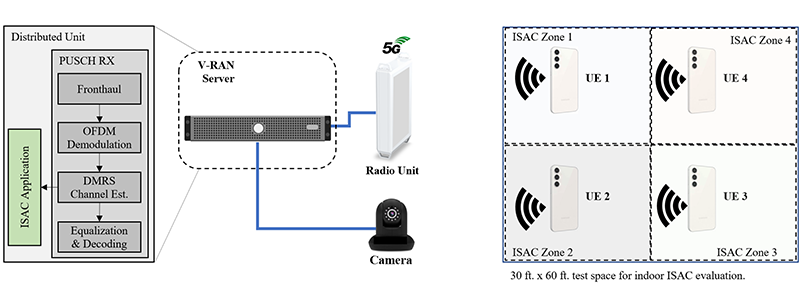
Figure 5. An illustration of the FR1 indoor ISAC testbed at SMI Lab, with RF and camera inputs
Using this setup, multiple demonstrations have been developed including zone-level UAV presence detection, target localization using multi-sensor fusion, as shown in Fig. 6. The UAV presence detection involves identifying the presence of a UAV in the vicinity area of each UE (identified as a zone) using the DMRS signals received from the UEs. The target localization involves tracking of a person using a combination of the RF and camera inputs. In this demo, the camera view is occluded by ambient objects in the environment (field of view is shaded yellow in Fig. 6), and it was demonstrated that an RF + camera fusion solution can enable accurate localization in all locations (~ 1m RMSE), reducing the tracking error by half in comparison to relying on either RF or camera information alone.
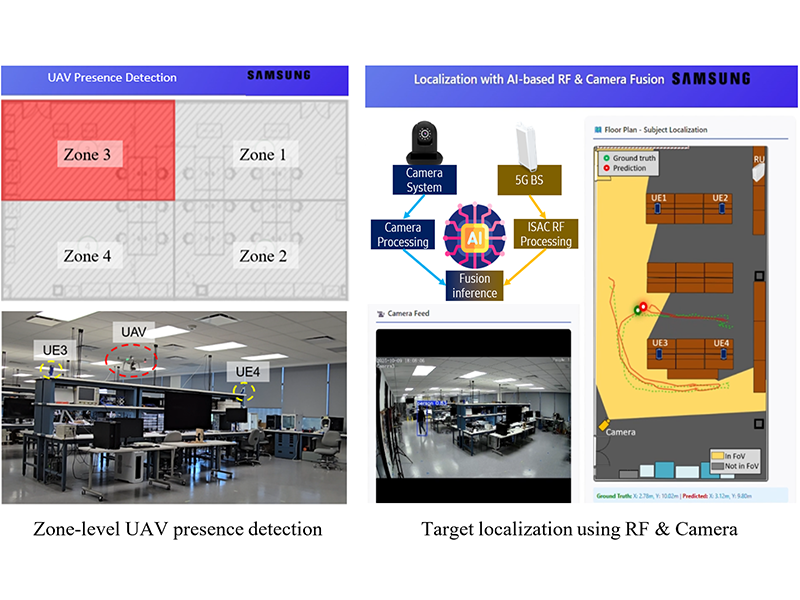
Figure 6. An illustration of the FR1 indoor ISAC testbed at SMI Lab, with RF and camera inputs
FR2 monostatic sensing: The Samsung Research China, Beijing team has developed an ISAC front end module that operates at 26.4 GHz and is capable of performing mono-static sensing. This module supports up to 400 MHz of bandwidth, and has a TX and an RX panel separated by an innovative successive interference cancellation circuit to reduce the TX-RX leakage. This setup has been used to successfully show drone tracking capability, while also simultaneously supporting a communication link, as depicted in Fig. 7.
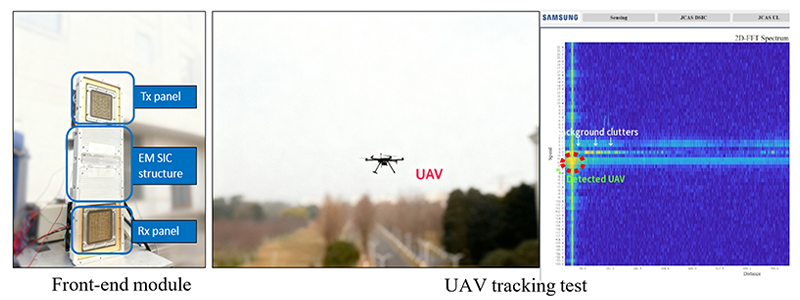
Figure 7. Samsung FR2 mono-static ISAC testbed and capability demonstration
Conclusion
ISAC has the potential to be a game changer for the telecommunications industry by introducing new monetization opportunities in an otherwise saturated market. By enabling "sensing as a service," ISAC can open up entirely new revenue streams for telecom operators, transforming their business models and creating value beyond traditional communication services. While ISAC can already be supported by existing 5G standards through proprietary implementations, its support is expected to be significantly enhanced in 5G Advanced and 6G standards. This evolution will likely lead to more standardized, efficient, and capable ISAC systems that can be deployed at scale across different networks and vendors. Despite the numerous use cases that have been proposed for ISAC technology, initial commercial efforts are likely to focus on UAV detection applications. This focus is driven by the immediate security needs arising from increasing UAV incursions and the potential monetization opportunities available from government and military sources. However, before practical deployment of ISAC systems can become widespread, there remain several interesting research directions that require further exploration. These technical challenges, combined with the need for standardized frameworks and business models, will shape the development timeline and adoption curve for ISAC technology in the coming years. As these challenges are addressed through continued research and development, ISAC is positioned to become a fundamental component of future wireless networks, enabling a wide range of innovative applications and services.
References
[1] V. V. Ratnam, H. Chen, C. Zhang, C. Qian, Z. Zhang and B. Yu, "Integrated Sensing and Communication in Wi-Fi and Cellular: An Industry and Standards Perspective," IEEE J. Sel. Topics Electromagn., Antennas, Propag., vol. 1, no. 1, pp. 393-405, Sept. 2025.
[2] F. Liu et al., “Integrated sensing and communications: Toward dual-functional wireless networks for 6G and beyond,” IEEE J. Sel. Areas Commun., vol. 40, no. 6, pp. 1728–1767, Jun. 2022.
[3] 5G Americas White Paper, “Transforming industries with integrated sensing and communications”, July 2025.
[4] O. Trusty, “Getting after it: Seizing America’s moment on ISAC and spectrum leadership”, keynote remarks at ISAC Strategy Summit, Arlington, VA, USA, Aug. 2025.
[5] G. Xu, et. al., “Upper Mid-Band Spectrum for 6G: Opportunities and Key Enablers”, Samsung research blog, Aug. 2024.
[6] 3GPP, “TR 22.837, Feasibility study on integrated sensing and communication,” 2024.
[7] 3GPP, “R1-2505006, CR to introduce channel model for ISAC”, May 2025.
[8] D. Wen, Y. Zhou, X. Li, Y. Shi, K. Huang and K. B. Letaief, "A Survey on Integrated Sensing, Communication, and Computation," in IEEE Communications Surveys & Tutorials, vol. 27, no. 5, pp. 3058-3098, Oct. 2025, doi: 10.1109/COMST.2024.3521498.
[9] 3GPP, “RP-251861, New SID: Study on Integrated Sensing And Communication (ISAC) for NR,” June 2025.
[10] V. V. Ratnam, H. Chen, H.-H. Chang, A. Sehgal, and J. Zhang, “Optimal preprocessing of WiFi CSI for sensing applications,” IEEE Trans. Wireless Commun., vol. 23, no. 9, pp. 10820–10833, Sep. 2024.
[11] N. Ferdinand, J. Cho, C. J. Zhang and J. Lee, "DFT-p-FDMA: A Waveform for Doubly Selective Channels," IEEE International Conference on Communications Workshops (ICC Workshops), Montreal, QC, Canada, 2025, pp. 1055-1060, doi: 10.1109/ICCWorkshops67674.2025.11162321.