Communications
Reimagining Wireless Channel Modeling with Generative AI
Introduction
Precise channel modeling has always been the cornerstone of wireless communication system design. As networks evolve from 5G to 6G, the demand for channel models that capture the spatial, temporal, and frequency-selective characteristics of real-world environments has grown dramatically. Traditional models, whether empirical, analytical, or statistical, often struggle to reproduce the real world stochastic and dynamic nature of wireless propagation across various deployment scenarios. For example, 3GPP-defined channel models are built around a fixed set of scenarios, each with its own predefined parameters. These scenarios, such as urban macro, urban micro, or rural, capture only broad, generic deployment conditions and offer little flexibility to model environments with specific geometries or unique features. On the other hand, ray-tracing-based models can capture scenario-specific details, but they require highly accurate descriptions of the environment, including building layouts and material properties, and involve heavy computational effort to generate realistic channel outputs. In this context, generative AI (GenAI) has emerged as a transformative paradigm, capable of synthesizing high-fidelity channel realizations that bridge the measurement-based realism with the model-based generalization. In this blog, we explore how generative adversarial networks (GANs), diffusion models, and large foundation models can be used to reimagine wireless channel modeling that is closer to real field channel.
Wireless channel modeling traditionally relies on measurement campaigns and physical modeling. While these approaches provide accurate characterizations, they are limited by cost, scalability, and adaptability. Measurement data is environment-dependent, and empirical models are often constrained to specific frequency bands or antenna configurations. With the rapid densification of networks and the expansion of the operating spectrum range and the maturity of AI techniques there is a need as well as an opportunity to create channel models that can learn from field data and generalize across diverse deployment scenarios.
Our earlier research work in wireless channel modeling using the GANs laid the groundwork for the integration of GenAI in this domain [1]. As GenAI methodologies continue to evolve, we explore their application in wireless channel modeling. This blog delves into the utilization of advanced GenAI techniques, such as diffusion models and custom foundation models, which are discussed in the subsequent sections of the blog.
Generative Adversarial Networks for Channel Modeling [1]
Generative adversarial networks (GANs) consist of two neural networks, generator and a discriminator, trained in opposition. The generator learns to synthesize samples that mimic the real data distribution, while the discriminator learns to distinguish between real and generated data. Through this adversarial process, the generator progressively improves until the generated samples are statistically indistinguishable from real ones.
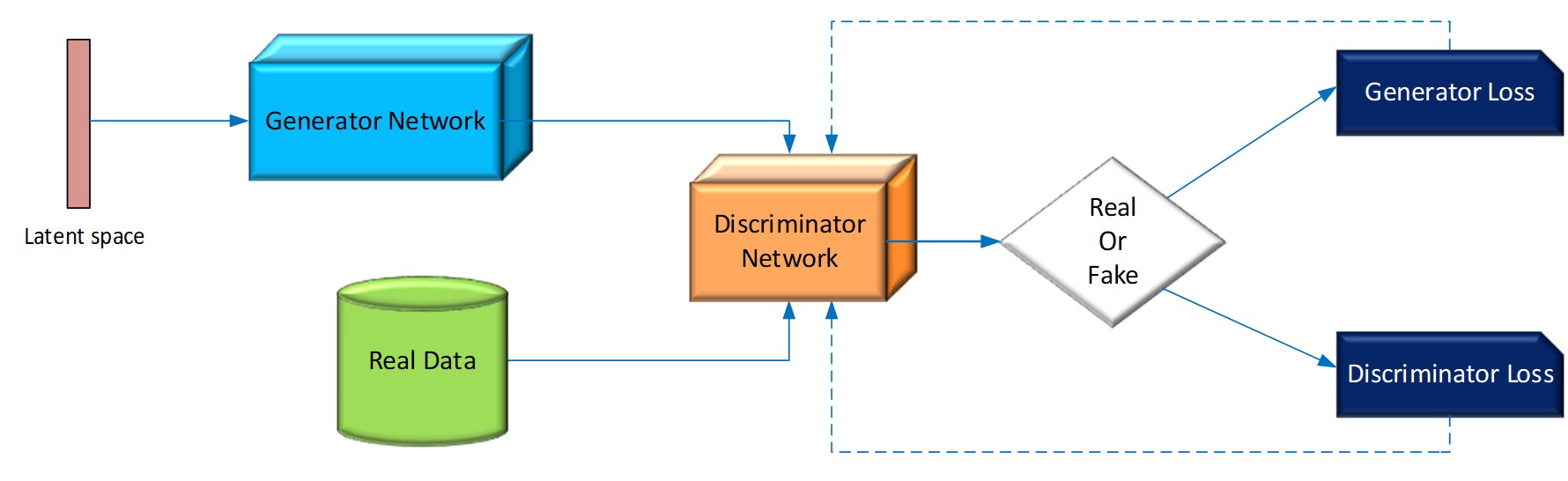
Figure 1. GAN conceptual diagram
In wireless channel modeling, the GAN can be trained on measured or simulated channel coefficients to reproduce their spatial-temporal characteristics [1]. The generator receives random noise and outputs synthetic channel coefficients, while the discriminator ensures the fidelity of the generated data. This approach enables modeling of complex propagation scenarios, including time-varying and frequency-selective channels, without the need for explicit statistical models.
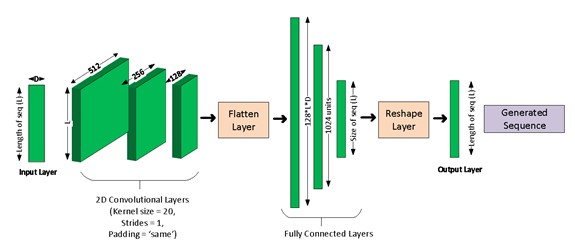
Figure 2. Generator architecture
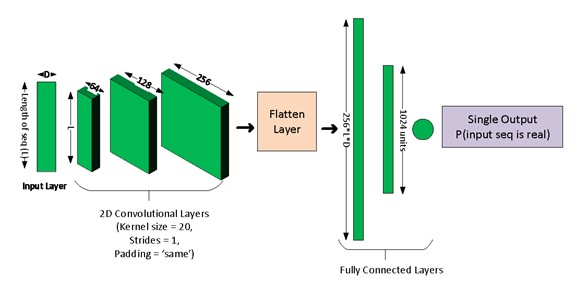
Figure 3. Discriminator architecture
The GAN-based channel model was validated using the 3GPP CDL-C channel model as a reference. The model successfully reproduced the required probability density function, temporal autocorrelation, and power spectral density (PSD) characteristics of the reference data. These results confirm that the GAN model effectively captures key fading characteristics.
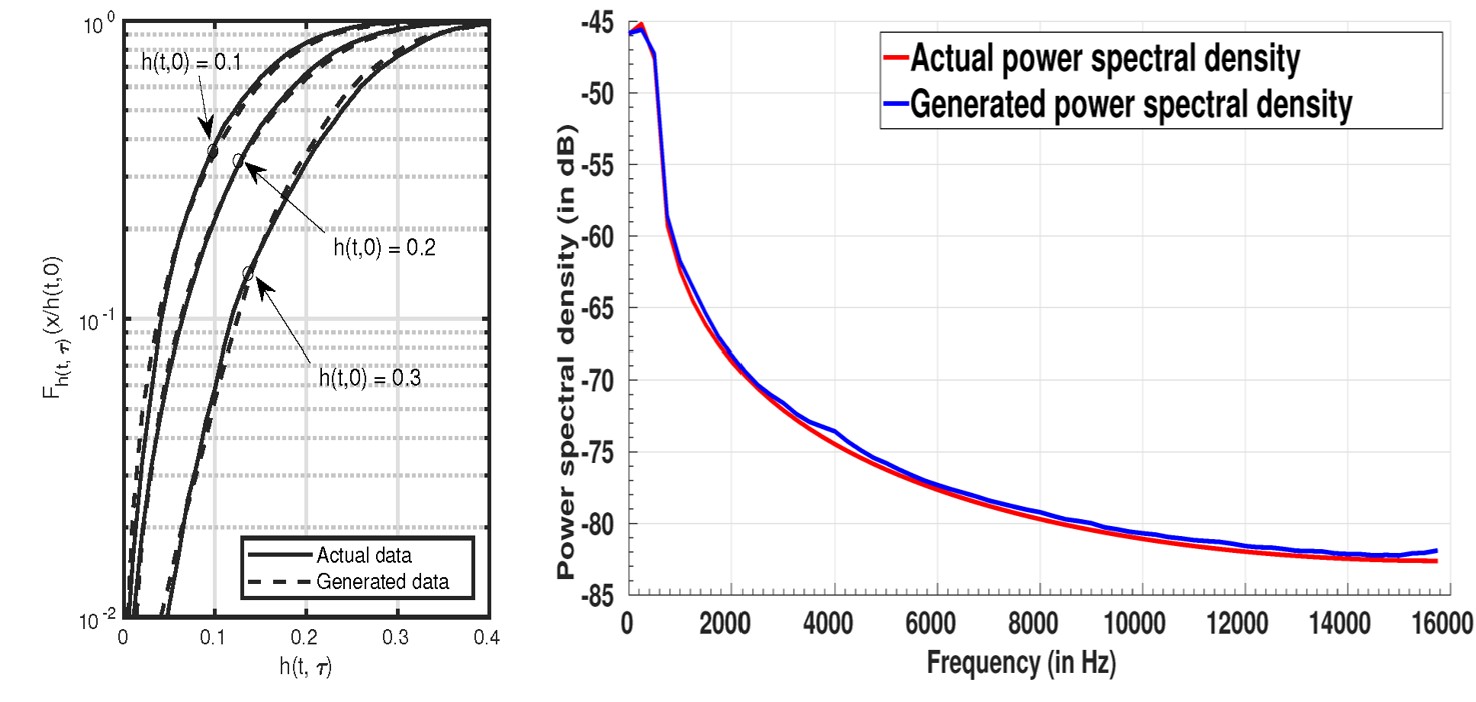
Figure 4. Conditional cumulative distribution function plots for the sequence that is generated from GAN and the original samples from first tap of CDL-C, and Power spectral density as a function of frequency for the sequence that is GAN and actual
Diffusion-Based Channel Modeling
Diffusion-based generative models, inspired by thermodynamic processes, have recently surpassed GANs in generating high-quality data samples. These models iteratively transform random noise into structured samples through a learned denoising process governed by stochastic differential equations (SDEs) [2]. These models are preferred due to their stable training and ability to avoid mode collapse compared to GANs. In the context of wireless channel modeling, diffusion models enable controllable generation of channel states by conditioning on parameters such as delay spread, user velocity, or carrier frequency.
Instead of density function $p(x)$, modelling score function i.e., $∇_x\log p(x)$ offers a more practical and reliable way to learn complex data distributions. The score function of a distribution $p(x)$ is defined as $∇_x\log p(x)$ and a model for the score function is called a score-based model, which we denote as $s_θ(x)$. Noise-conditioned score network (NCSN) learns to model data distributions by estimating the score function of the data corrupted with varying levels of gaussian noise. Typically, an architecture with encoder-decoder structure and skip connections is used for this denoising score matching. Once we have trained a score-based model, we can use an iterative procedure called Langevin dynamics to draw samples from distribution $p(x)$ using only its score function. We sample $x_0$ ~ $π(x)$ from an arbitrary prior distribution and then iterate $x_(i+1)=x_i+ϵ∇_x\log p(x)+\sqrt{2ϵ}z_i i=0,1,..N$ where $z_i$ ~ $N(0,I) . x_N$ obtained through the above procedure converges to a sample from the distribution $p(x)$ given small enough $ϵ$ and large enough $N$.
We show the pipeline for utilizing score based generative modelling framework described above for modelling wireless channels in Fig. 5. The channel data is generated by a 3GPP simulator which takes channel parameters as input. This complex data is then converted to polar representation before sending it to the model. Multiple levels of noise are then added to this channel to train the score-net which models the score function for probability distribution of channel data. To sample data, the model progressively refines random noise into data samples by applying Langevin dynamics, iteratively adding small Gaussian noise and moving along the estimated score. An annealing schedule reduces noise over time, enabling convergence to realistic samples.
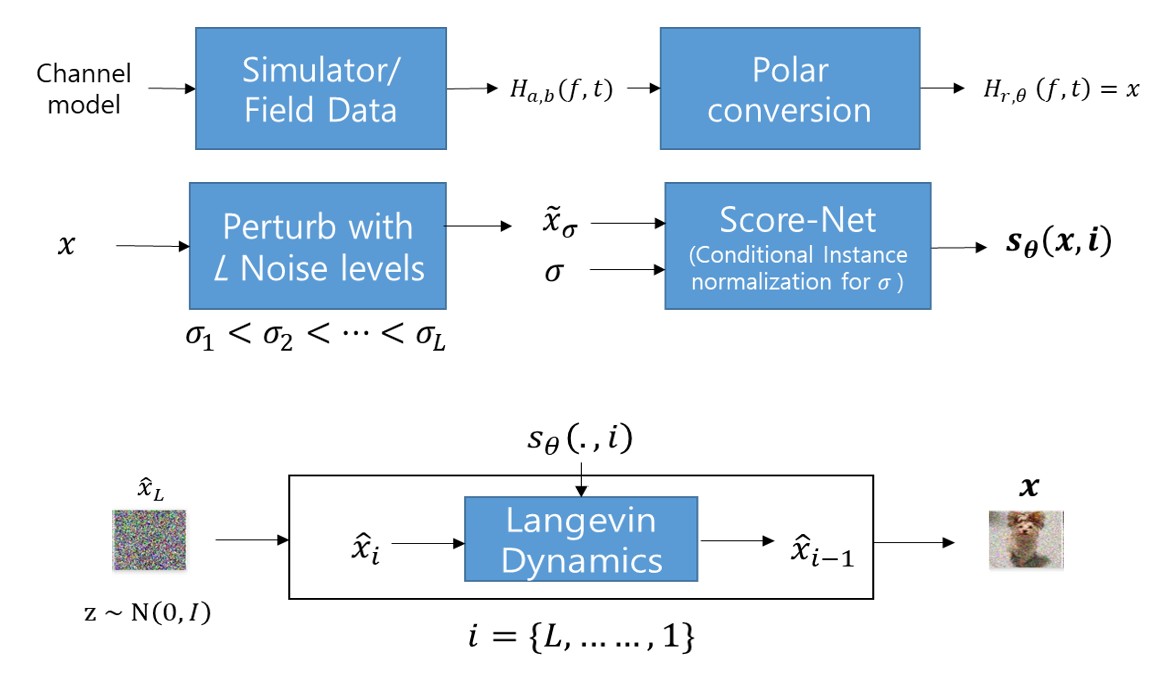
Figure 5. Pipeline for modelling channels with Noise-conditioned score network. (a) Data Preparation (b) Score Net training (c) Sampling with Langevin dynamics
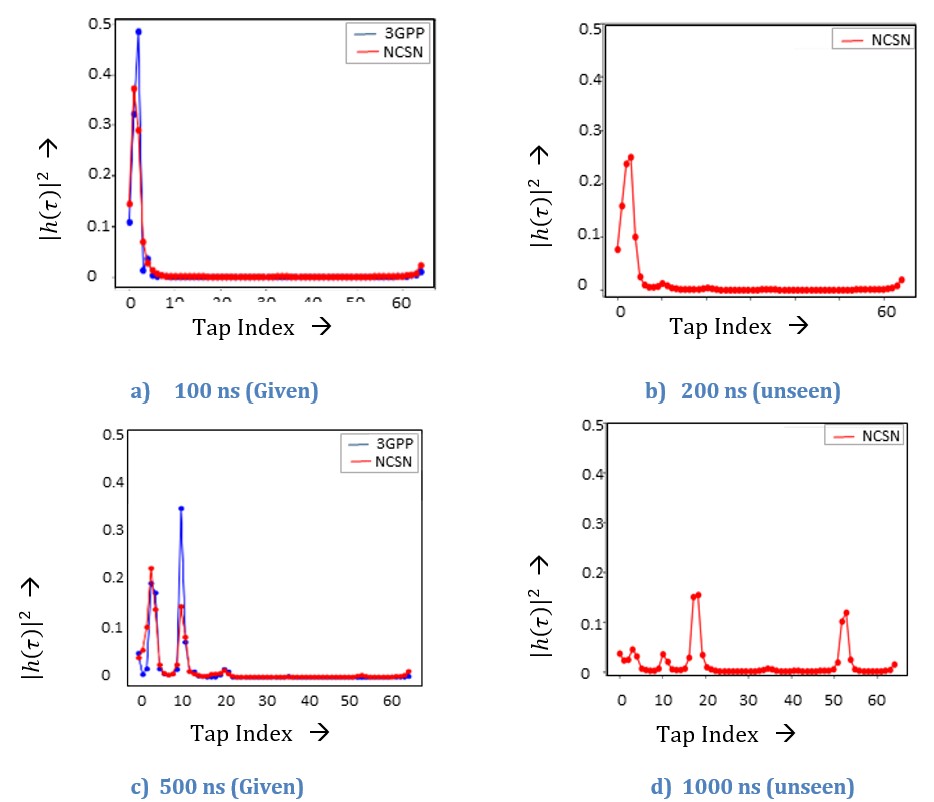
Figure 6. Normalized power delay profiles for four delay spreads a) 100ns, b) 200ns (unseen), c) 500 ns, d) 1000 ns (unseen)
In the sampling process, model generates $H(f,t)$ i.e channel in frequency-time domain as output. The power-delay-profile (PDP) i.e $|h(τ)|^2$ of the channels used for training and dataset generated from the model are compared. This underlying PDP of the channel $H(f,t)$ is determined by the channel type like CDL, TDL etc or the parameters like delay-spread, doppler spread etc., Fig 6 shows the channels generated from the model trained on 3GPP channels with their delay spread i.e 100, 500ns used to embed context. The successful generation of channels for unseen delay spreads highlights the model’s adaptability and controllability (Figure 6). We can therefore controllably generate unseen channels as a mixture of channels by embedding properties like delay spread, channel type, speed as context to NCSN based diffusion model. This experiment not only reinforces the model’s practicality but also opens up possibilities for tailoring channel models to specific requirements, such as varying environmental conditions or user needs.
Foundation Models for Wireless Channels
Beyond GANs and diffusion models, the field is now moving toward large foundation models for wireless communication, analogous to large language models (LLMs) in NLP. However, unlike text, images, and videos, wireless channel data is difficult to interpret without sufficient propagation context for a cell site, transmitter, and receiver. This cell site-specific context can be uniquely specified using the camera-images or bird-eye-view of the cell site and location of devices. Unlike, GAN and diffusion methods, with the self-attention mechanism to understand the context and relationships in the data, foundation models with transformers can handle such complex context efficiently. This motivates a paradigm shift for creating a foundational model for wireless channel that leverages multi-modal context of the site and aligns it with corresponding wireless channel data.
The large wireless channel model (LWCM) that employs transformer-based architectures to learn the channel representations and fuse the context of propagation environment from the known field channel measurements and use them to generate channels in unseen environment is briefed below.
We use multi-path component (MPC) of wireless channel, that consists of amplitude, phase, delay, angles of departure, and angles of arrival, for representation and training a foundation model. We choose MPCs domain instead of time-frequency-space domain because of its versatility in representing the channel and the ability to extend the number of transmit and receive antennas and receiver bandwidth making it much closer to the physical world.
We provide a simplified view of training a proposed transformer-based foundational model that uses cell site context through image as outlined here. As shown in below figure, site-images $(I_{env}^i)$ are fused with reference positions $(L_{sup}^{(M,j)})$ using an AI model $f_1$ to get unified spatial features of the site. Similarly, corresponding wireless channel MPCs $(H_{sup}^{(M,j)})$ are represented in a universally usable format of numerical vector using $f_2$, similar to word2vec that converts text to a vector. We call the $f_2$ as MPC2vec. Then $f_3$ fuses reference position’s channels with spatial features. These fused features are used to provide the relevance between the spatial feature of a site of interest and its corresponding channel. Then $f_4$ conditions on input site image $(I_{env}^{i_q })$ and location $(L_q^{(i_q,j)})$ to predict its channel matrix. The output of $f_4$, during the training, is compared with reference channel for error backpropagation. While, for the inference, it is used as the predicted channel. In summary, this foundation model, given the relative location of transmitter and receiver in the cell site on its image representation, generates the multipath channel.
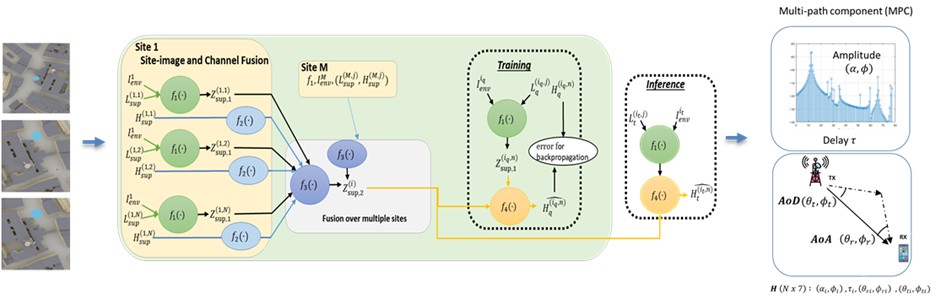
Figure 7. Training of the proposed cell-site context aware foundational AI model LWCM
Notable Use Cases of Foundation Models Foundation models have demonstrated significant potential in various applications, including:
Data Generation: Creating realistic data tailored to specific contexts, which enhances the training of AI models for wireless communications and digital twin applications.
Advanced AI Solution Design: Supporting the development of sophisticated AI solutions for downstream tasks that depend on channel features, such as channel estimation, interpolation, channel state information (CSI) estimation, CSI compression, and reporting, as well as beam prediction, localization, and sensing.
Outlook: Toward AI-Native PHY and 6G
Generative AI offers a new paradigm for physical-layer design, enabling data-driven models that can learn and adapt to environment-specific conditions. By synthesizing realistic wireless channels, GenAI can accelerate network simulations, improve AI model training, and facilitate online adaptation in real deployments. In 6G, where networks are expected to be AI-native, such generative channel models will serve as the backbone for self-evolving, context-aware communication systems.
References
[1] Singh, D. and Chavva, A. K. R., “Modeling time-varying and frequency-selective channels with generative adversarial networks,” ICC 2022.
[2] Song, Y. and Ermon, S., “Generative Modeling by Estimating Gradients of the Data Distribution,” NeurIPS, 2019