Communications
Phase Error Resilient Practical Channel Estimation by Special Orthogonal Group Equivariant AI/ML
Background
Channel estimation (CE) is a critical component for ensuring optimal performance in wireless networks, operating primarily within the physical layer. It necessitates low computational complexity and real-time processing capabilities. While variable wireless environments often demand sophisticated artificial intelligence/ machine learning (AI/ML) models for learning and inference, the real challenge lies in developing low-complexity AI-based CE solutions for practical deployment [1]. Current research mainly focuses on employing AI/ML techniques for additive-noise reduction and channel interpolation. However, multiplicative noise, such as phase noise from oscillators and timing offsets, frequently occurs and can degrade CE performance, particularly in data-driven AI-based systems. On the one hand, using AI to tackle both types of noises may lead to increased model complexity and training time, since the model has to learn all the combinations of channel realizations and phase rotations. On the other hand, addressing additive and multiplicative noises separately may introduce estimation errors in each step and these errors propagate from one block to another and eventually degrade the overall performance.

Figure 1. Illustration of the conventional CE algorithm from a group theoretical viewpoint.
Therefore, to address these issues, a novel special orthogonal group (SOG) equivariant CE (SOGeCE) with low complexity is proposed to jointly and efficiently handle multiplicative and additive noises. By re-looking into the essence of channel estimation from group theory perspective, we find out that all phase rotations belong to the so-called special orthogonal group [2], and conventional methods, such as timing offset compensation (TOC) or re-compensation (TORC), can be viewed as group actions, as shown in Fig.1. This triggers the proposal of SOGeCE, an upgraded AI/ML model with its weights and biases being projected onto subspaces that are stable (invariant) under the group action. The proposed SOGeCE can provide enhanced CE performance with phase error resilience and low complexity.
Method
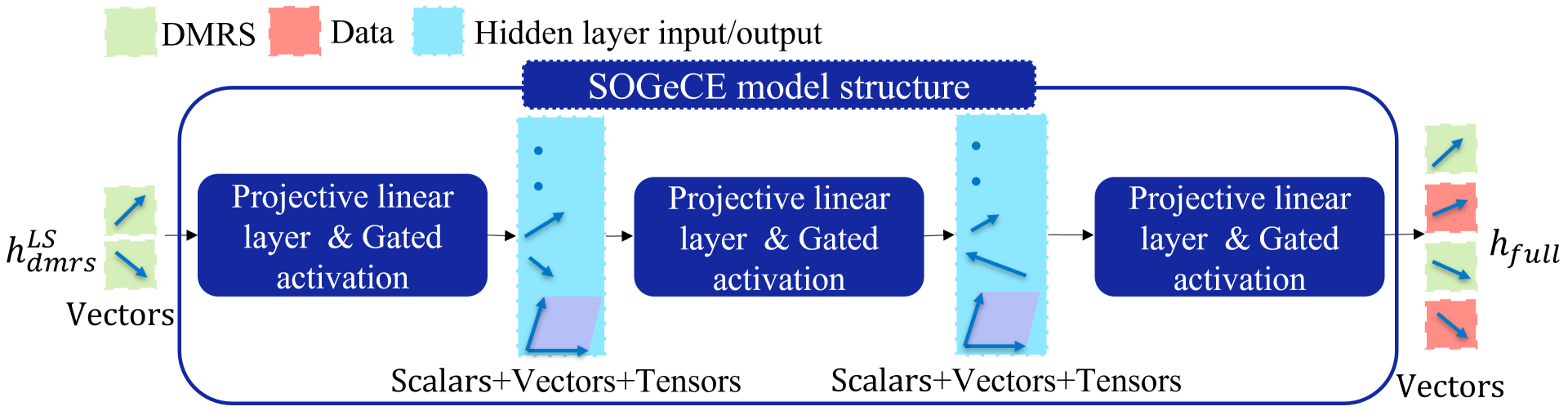
Figure 2. An illustrative architecture of the proposed SOGeCE model.
The proposed SOGeCE model is illustrated in Fig.2. The model input is the least squares (LS) estimate of channel on resource elements (REs) of demodulation reference signals (DMRS), and the output is the enhanced CE on REs of both DMRS and data. One key difference from other AI/ML based CE, lies in the non-homogeneous vector spaces used in representing the input/output of each layer. These vector spaces can be represented as direct sum of scalars, vectors, and tensors (as shown by dots, arrows, and parallelograms in Fig.2), and more generally as tensor algebra. The reason and objective of this novel transformation is to encode the inductive bias of how SOG acts on each space. Another difference is that the model consists of projective linear layers and gated non-linear activation functions. To make the model become SOGe, the trainable weights and biases in each linear layer are projected onto subspaces that are stable (invariant) under the action of SOG. Moreover, the conventional activation functions, such as the rectified-linear unit (ReLU), are replaced by gated ones, which is to keep the activation function being SOGe too.
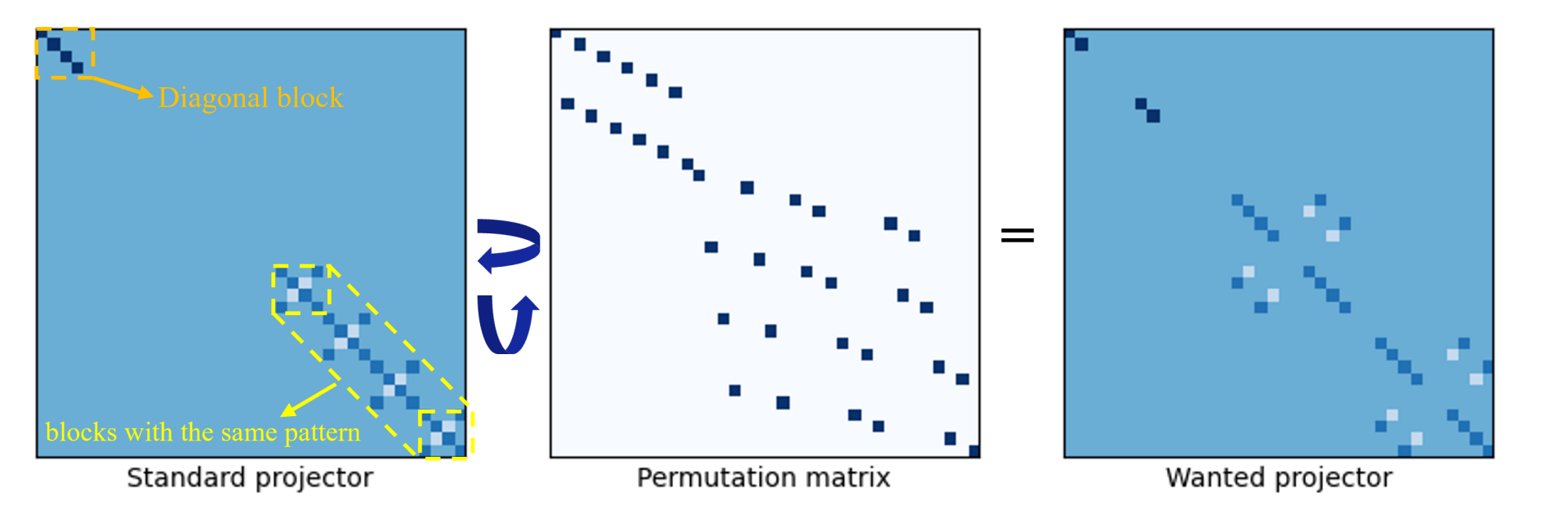
Figure 3. Illustration of sparse projector calculation.
To obtain projectors for weights and biases, one needs to do singular value decomposition (SVD) of a matrix with dimension that is proportional to the product of layer input and output dimensions. This can be computationally intensive and even dominated over other operations of the model. Therefore, a faster and more efficient algorithm for projector calculation is proposed by exploiting the novel hybrid representations in each vector space. Fig.3 demonstrates the principle of the proposed algorithm. Roughly speaking, a so-called “standard projector”, which is more compact and regular, is firstly obtained by using tensor product and SVD of small matrices (a 4x4 matrix in Fig.3), then the projector is permuted in columns-wise and row-wise manners to finally obtain the wanted projector.
Experiments
We demonstrate the feasibility and superiority of the proposed SOGeCE based on the 5G physical uplink shared channel (PUSCH) link level simulator. The model consists of two hidden layers with each layer using the same representation comprising ten scalars, ten vectors, and five second-order tensors, which makes it have comparable complexity with the conventional CE. The model is trained over 100 epochs with the learning rate being 0.001 and loss function being MSE. Fig.4 shows the block error rate (BLER) and throughput performance under TDLC channel with 300ns delay spread and 100Hz maximum Doppler frequency. The modulation and coding scheme index [3] is set to be IMCS = 2. It can be seen that almost 5dB gain is achieved over conventional CE with TO = 30 at BLER=0.3. Obviously, the conventional CE is more sensitive to timing offset and its performance is seriously degraded when TO increases. The proposed SOGeCE, however, shows strong resilience to TOs, as its performance is slightly changed when TO changes. In comparison with MLP-Mixer based CE, the BLER is improved by the proposed SOGeCE at TO = −10. When TO increases, the MLP-Mixer model is collapsed and shows even worse results than conventional CE. Fig.4 (b) shows the corresponding throughput performance. It can be seen that more than 8-times throughput improvement over conventional CE is achieved at the point of 70% maximum throughput, when timing offset equals -10. For larger TO values, the throughput performance of SOGeCE is slightly degraded, while the performance for conventional CE is outage at SNR=-10dB.
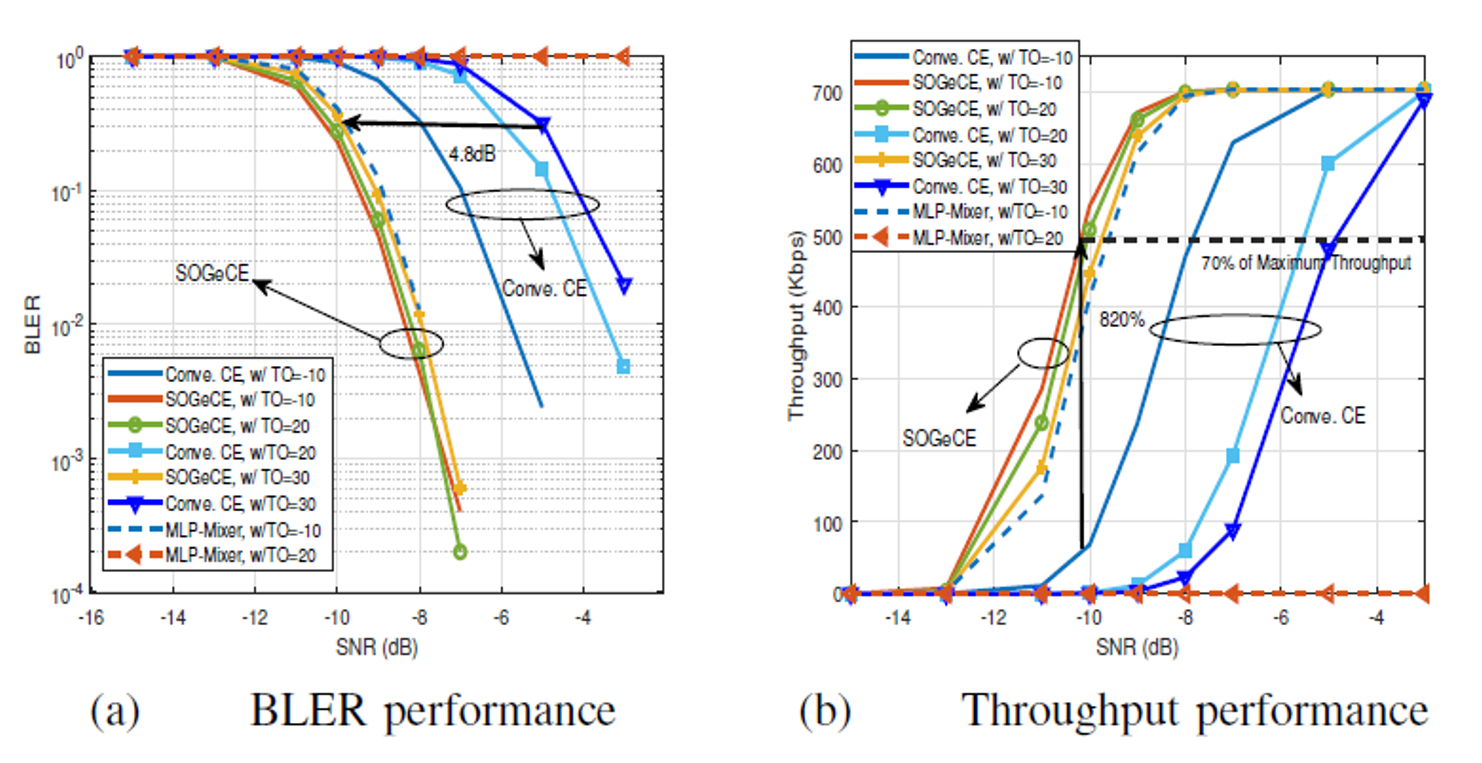
Figure 4. BLER and throughput performance under the TDLC channel.
Conclusion
In this paper, a SOGe upgraded AI/ML model is proposed for CE, which can jointly perform noise reduction, phase rotation and channel interpolation. Compared with existing AI based CE and conventional methods, the proposed method can achieve significant performance gain and shows strong resilience to phase errors. Meanwhile, the proposed method has low computational complexity that is comparable to conventional CE method and achieves more than 99% reduction on model complexity in comparison with MLP-Mixer based CE, which further facilitates the practical application of the proposed method in reality.
References
1. Samsung Research. 6G vision: AI-native & sustainable communication. 2025
2. S. Sternberg. Group Theory and Physics Cambridge University Press, 1995.
3. 3GPP TS 38.214, “Technical Specification Group Radio Access Network; NR; Physical layer procedures for data.”