Communications
Ambient IoT: Connecting the Things That Could Never Afford a Battery
Introduction
Every generation of mobile networks has expanded the set of devices it can serve: from phones to smartphones, machines, vehicles, and low-power sensors. Yet many low-cost physical objects remain outside the network—pallets in warehouses, garments on shelves, medical instruments, shipping containers, and sensors in farmland or on bridges.
These objects cannot afford a battery or a conventional cellular modem. Today, they are tracked, if at all, by passive RFID, barcodes, or other short-range technologies that typically require a dedicated handheld reader and a person standing within a few meters.
Ambient IoT changes the question. It considers devices that harvest energy from radio waves, light, heat, or vibration, using no battery or only a tiny capacitor, and makes them reachable through the mobile network. Such devices consume roughly one microwatt to a few hundred microwatts, exchange only a few hundred bits at a time, and may be unavailable until they have harvested enough energy to respond.
Ambient IoT is a RAT-independent IoT interface integrated with the 5G System—not a conventional 5G NR device class. This article considers what that foundation means for a future-proof 6G design.
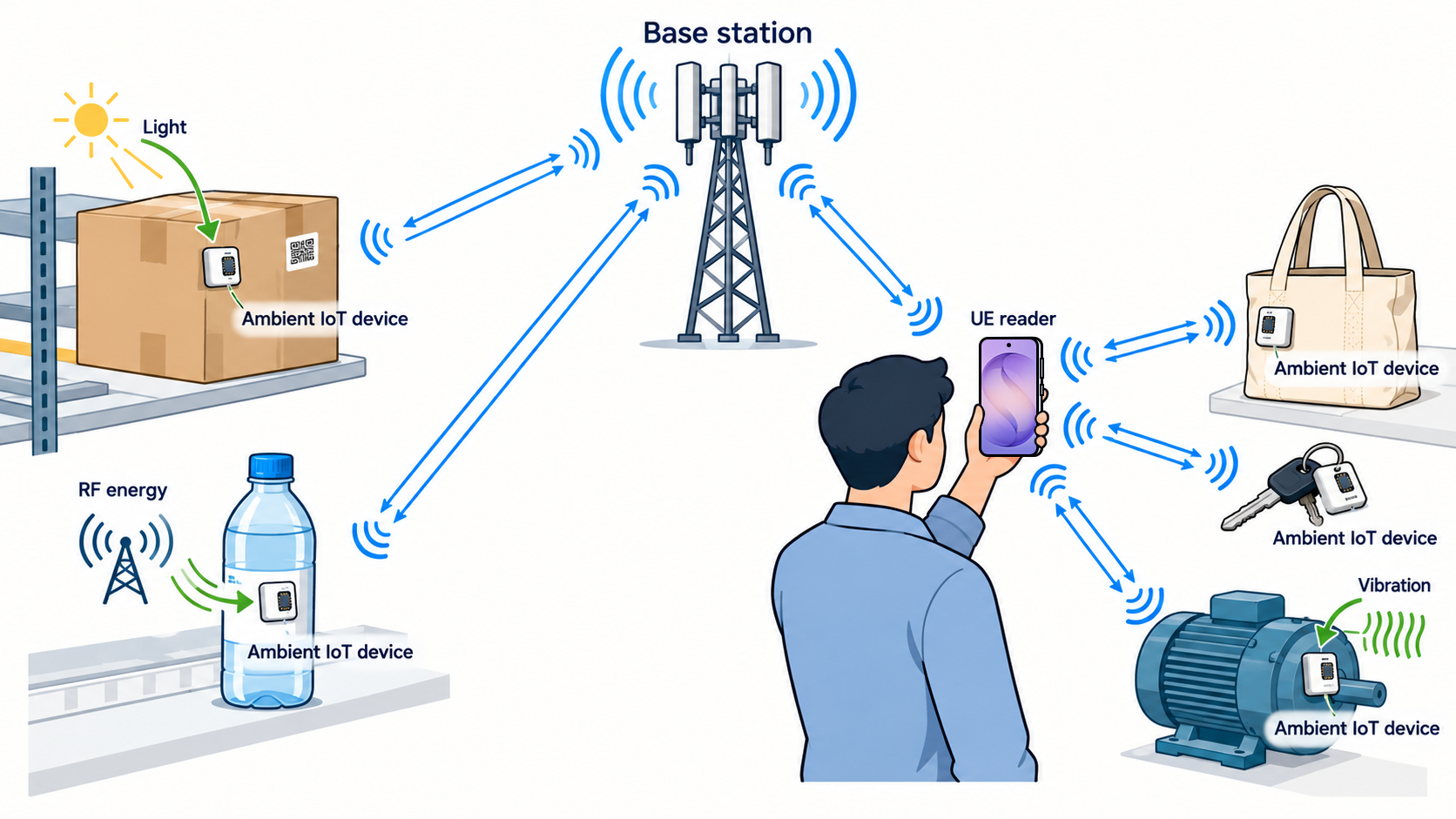
Figure 1. Ambient IoT connects low-cost assets across logistics, infrastructure, and agriculture through managed readers.
What Ambient IoT Means for the Mobile Ecosystem
Ambient IoT does not replace RFID in every scenario. Passive UHF RFID remains mature and economical where a handheld reader can be brought to a tag. Ambient IoT’s value lies elsewhere: a base station or network-controlled smartphone can act as the reader, removing dedicated reader infrastructure and manual scanning. Inventory can therefore become continuous, with coverage managed by the network rather than by the person holding a scanner.
This creates a battery-free device layer for the mobile network. It reuses cellular strengths—licensed spectrum, wide-area deployment, managed identity and security, core-network integration, and global-scale standardization. A 3GPP-compatible device can be inventoried by an outdoor macro cell, an indoor small cell, or an employee’s smartphone under the same network control.
The opportunity spans warehousing, medical and industrial inventory, ports and supply chains, smart grids, agriculture, and structural monitoring. The common need is not high throughput, but low-cost reachability: knowing where thousands of items are, what state they are in, and sending a short command when needed. Accordingly, the requirements are modest in throughput but demanding in scale: messages on the order of a thousand bits, latency of 1–10 seconds, 0.1–5 kbps, up to 150 devices per 100 m² indoors, and coverage ranging from tens of meters indoors to hundreds of meters outdoors.
The design must also accommodate severe physical constraints. A one-microwatt device may lack a crystal oscillator, have an envelope-detector receiver far less sensitive than a smartphone’s, and communicate by reflecting an externally provided carrier. It may disappear whenever its stored energy runs out. A credible 6G Ambient IoT design must therefore treat energy availability, weak receivers, and intermittent reachability as primary design inputs.
Device Types, Deployment Scenarios, and Traffic Types
Ambient IoT is best understood through three connected dimensions: the device’s power and radio capability, where the reader is deployed, and who initiates communication.
Device Types
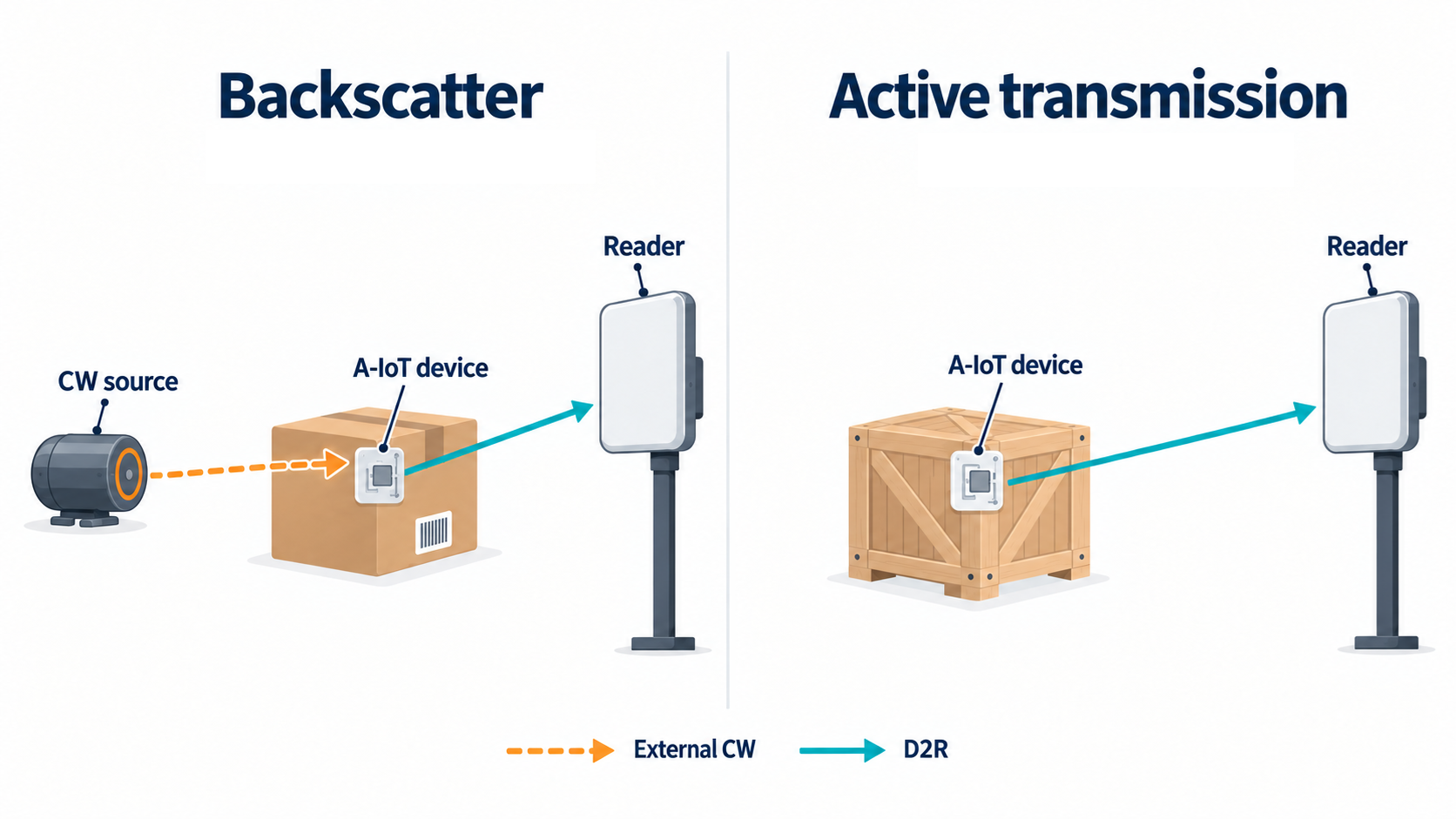
Figure 2. Backscatter and active transmission by Ambient IoT devices.
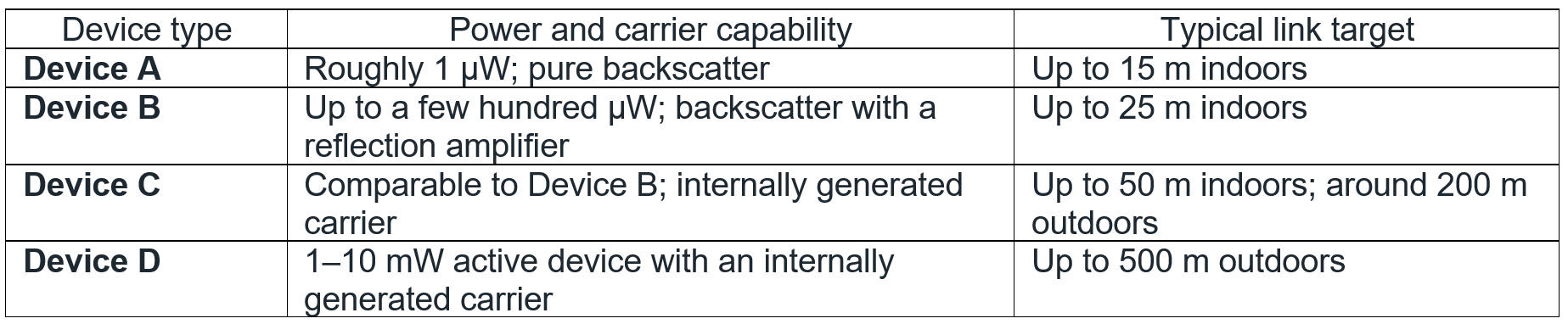
Table 1. Ambient IoT device types
The classes reflect physical capability rather than an application category. Device A and Device B are intended for the simplest, lowest-cost devices. Device C and Device D add enough energy and RF capability to extend coverage or support an active carrier. Device D serves outdoor use cases that need longer reach while remaining far below the complexity and power consumption of conventional cellular devices.
DeploymentScenarios
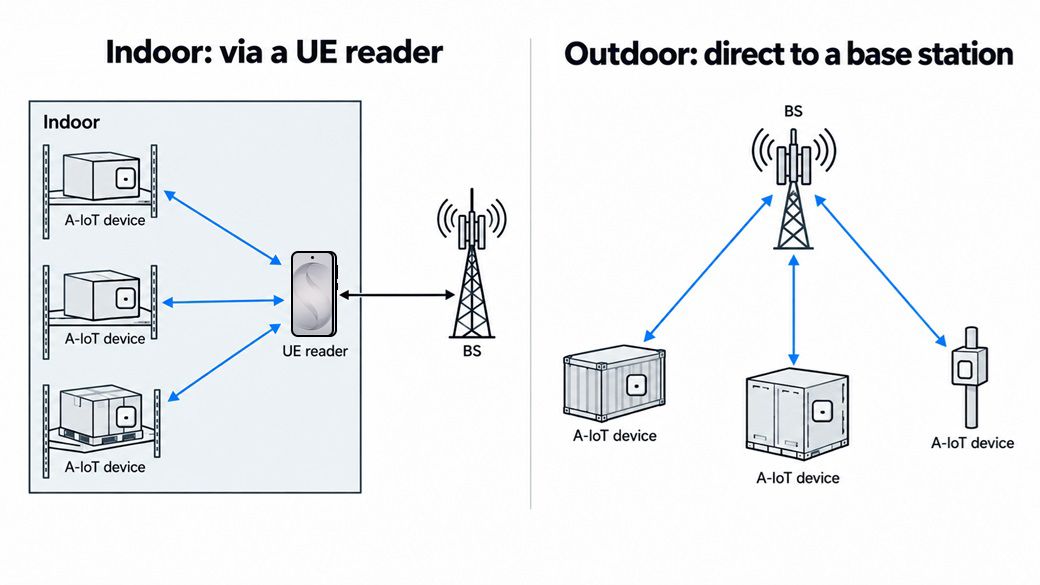
Figure 3. Example of Ambient IoT deployment scenarios.
Ambient IoT can be deployed in a variety of settings. Indoors, devices can communicate directly with an indoor base station, or a nearby UE can act as a reader and relay communication between the devices and a base station. Outdoors, devices can communicate directly with a base station. Figure 3 illustrates the indoor UE reader and direct outdoor communication examples.
Ambient IoT operates in NR FDD bands, including n28 (around 700 MHz), n5 (around 850 MHz), and n8 (around 900 MHz). The choice of frequency band depends on the reader. A base station reader transmits R2D signals in the downlink band, while a UE reader uses the uplink band. D2R transmissions use the uplink band. Backscatter devices also require a carrier wave (CW) supplied by an external source in the uplink band.

Table 2. Ambient IoT operating bands
Traffic Types and Device Availability
Ambient IoT devices can exchange information in several ways. Ambient IoT supports network-triggered communication: the network can send information or a command to a device (device-terminated, DT) or trigger the device to send data back (device-originated, device-terminated-triggered, DO-DTT). Active devices, such as Device 2b and Device C, can also support device-initiated communication, where a device sends a report on its own, such as a periodic update or an event alert (device-originated autonomous, DO-A).
Because these devices rely on energy harvesting and have limited energy storage, they may be temporarily unavailable when they lack sufficient energy. Readers therefore need to account for device availability when initiating communication and when handling cases where no response is received.
Simplified Radio Interface
Ambient IoT keeps the device-side radio interface simple, relying on the physical (PHY) and medium access control (MAC) layers without the full protocol stack used by conventional cellular devices. Its transmission techniques are lightweight as well: reader-to-device signals use on-off keying (OOK), while device-to-reader signals can use OOK or binary phase-shift keying (BPSK). Devices do not need to perform conventional OFDM demodulation, helping reduce processing, power consumption, and cost.
What Ambient IoT Needs to Last
Ambient IoT will not become sustainable by adding every possible feature to every tag. It will last if the common foundation remains simple enough for the lowest-power devices, while higher-capability devices can add only the functions they genuinely need.
First, the air interface needs a small and stable common core: basic identity, access, reader-to-device communication, device response, and compact data exchange. This common core is what allows a tag to remain interoperable as it moves between an indoor small cell, an outdoor macro cell, and a network-controlled smartphone reader.
Second, energy availability must be treated as normal operating behavior, not as an exception. A tag may disappear, harvest energy, and return later. Procedures should therefore tolerate interrupted exchanges, avoid unnecessary retries, and let readers coordinate communication with the device population’s likely availability.
Third, the reader function must remain flexible while staying under network control. Different deployments will need base stations, smartphones, fixed enterprise nodes, or other reader-capable devices. The network should be able to select and coordinate those readers without creating separate Ambient IoT systems for each environment.
Finally, interoperability should be standardized, while deployment-specific choices remain flexible. Security, identity, basic device capability signaling, and reader coordination need common rules. The exact reader placement, inventory algorithm, and application workflow can remain implementation choices.
The success measures should reflect this purpose: reliable inventory completion, realistic device availability, energy cost per successful exchange, reader-to-device reach, device cost, and coexistence with other radio services. The objective is not to make every tag more capable; it is to keep very inexpensive things reliably reachable for a long time.