Communications
CSA Matter 1.6 Release: Ambient Sensing, More Intuitive Setup, Multi-Ecosystem Experiences, and Context-Driven Control
Matter 1.6
Matter 1.6 delivers a major (albeit currently provisional) feature, Ambient Sensing, which enables ambient context information in the home. Otherwise, this release focuses on core enhancements to make homes work better: smoother commissioning, improved security and safety signals, and a new way for ecosystems to share control without stepping on each other’s toes.
What is Matter?
Matter was launched by the Connectivity Standards Alliance (CSA or “the Alliance”) in October 2022, backed by major companies in the residential IoT space including Samsung Electronics, Amazon, Apple, Google, and others.
The Matter program encompasses a full protocol specification, built on IPv6, which supports device discovery, provisioning, and control, all over secure interfaces. Additionally, there is an open-source SDK that supports all of the functions necessary to certify a Matter device, and a certification program with an automated test harness and test cases.
By adopting Matter, manufacturers can create devices that work together effortlessly, providing users with a more intuitive and cohesive smart home experience.
Matter release history
Since its launch, Matter specifications have been implemented, certified, and commercialized in over a thousand products from Alliance member companies. The major ecosystems (including Samsung SmartThings) provide the ability to commission (or “onboard”) and control Matter devices via their apps and controllers (e.g., IoT Hub device, TV, etc.), all of which are also subject to certification and other testing to ensure interoperability.
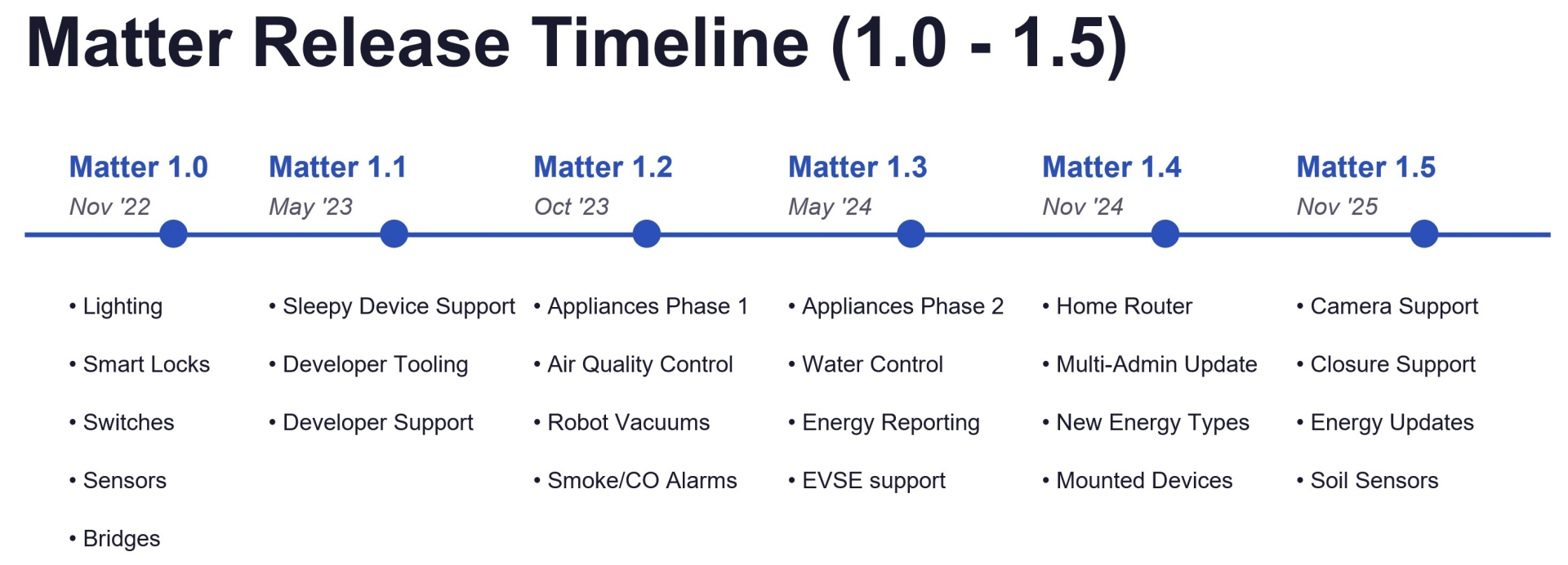
Figure 1. List of major devices per Matter Release version
Examples of Matter-enabled products in the marketplace include the Essentials lighting range from Nanoleaf, Philips Hue lighting, smart plugs and sensors from Eve, bridges from Aqara, and many more.
Key New Features in Matter 1.6
Ambient Sensing
The latest iteration of Matter, release 1.6, introduces a new ambient sensing feature, available on a provisional status. Nonetheless, it is expected to become a fully certifiable version in the near future. Matter ambient sensing provides 4 main categories of ambient context information:
This wide variety of information about ambient context and its detection location can be available through a new Matter device type: ambient context sensor. Another noticeable feature of the new Matter ambient context sensor is concurrent ambient sensing capability, meaning that, depending on the device capability, up to 10 different sources of ambient context sensing information can be presented under one single sensing event. This multiple sensing information delivery will help a user or a home service AI agent better assess situational context and awareness. For example, an ambient context sensor delivering multiple sensing information of an adult (object), falling (activity), and shattering (sound) in the bathroom, may provide much better situational insight than a sensor just providing a mere fall detection. So, the current Matter ambient context sensing feature is expected to play an important role in supporting services based on AI analysis to enhance security, safety, convenience, and comfort for users at home. Still, there are more enhancements to be added to ambient sensing in the near future. So, stay tuned.
Thermostat Suggestion: Flexibility to Balance Comfort and Energy Saving
Matter thermostat introduces a new feature that helps ensure user comfort while also prioritizing energy savings, cost, and so on. While a thermostat is operating HVAC based on a usual (or benign) preset scheduling, there could be a need to change the current preset operation due to home occupancy status or home activity or demand-based energy price variation. Then this thermostat suggestion feature can help a user to select and switch HVAC operation that best meets the situational change among existing user-defined preset choices. This new suggestion feature could facilitate the future AI-based thermostat automation, optimally matching various situational or environmental changes to user preferred presets.
NFC Commissioning: Easier and More Practical Setup
Commissioning has always been a part of smart home deployment that feels like some improvement would help, for example, installing light bulbs in the ceiling. Matter 1.6 fixes that with full NFC-based commissioning.
What this means:
NFC commissioning is not just more intuitive, the security story also benefits: physical proximity becomes part of the trust model.
Joint Fabric: Multi-Ecosystem Control With less Friction
Matter 1.4 gave us Enhanced Multi-Admin, maintaining separate Matter Fabrics (Matter’s virtual secure networks) and syncing between them.
Matter 1.6 introduces Joint Fabric.
Instead of each ecosystem running its own Fabric and sharing access across them, Joint Fabric lets multiple controllers — from different ecosystems — co-administer the same Fabric. Accordingly, Joint Fabric is useful for homes where people use different ecosystems.
Think of it as:
It uses a central datastore so any device added to the Joint Fabric becomes visible to all participating controllers. And because it counts as only one Fabric for the device, you still have room for traditional Fabrics (these are still desired in certain scenarios).
It’s another standardized tool to reduce friction when dealing with multiple ecosystems in the home.
Security & Device State: More Transparency, More Trust
Matter 1.6 adds several enhancements that make the smart home smarter, more secure and safer.
Partitioned CRLs (Certificate Revocation Lists)
Revocation lists can now be split into smaller partitions instead of one giant blob. That means:
This is foundational security plumbing, enhancing Matter Public-Key Infrastructure with industry best practices.
Security Sensor Event History
Security sensors can now report interoperable event history. Ecosystems get:
This is a big deal for multi-ecosystem setups where you want consistent behavior no matter which app you’re using.
Unmounted State for Smoke & CO Alarms
Alarms can now tell ecosystems when they’ve been removed from their mount. That’s a subtle but important safety signal, especially in rentals or managed properties.
Device Capability & Limits Communication
Devices can now clearly state what they can and cannot do in a standardized, interoperable way. Controllers get a more accurate picture, and users get fewer “why doesn’t this work?” moments.
Conclusion and Next Steps
The release of Matter 1.6 introduced advancements on Joint Fabric multi-ecosystem connection experience, NFC-based device setup, security enhancements and context-driven thermostat control improvement, further solidifying the existing feature set. It’s the kind of release that makes the whole ecosystem more robust, more predictable, and more aligned with what people expect of their smart home.
Samsung Research is an active participant in the development of the Matter specifications in this exciting time for the IoT. The continued evolution and adoption of Matter will further enrich user experience for the IoT "things", with the ability to access those "things" from their ecosystem(s) of choice including, most importantly, SmartThings.
Stay tuned for more updates as we continue to shape the future of smart living with Matter!
References
Here are some further resources on Matter:
Official Matter 1.6 announcement:
· https://csa-iot.org/newsroom/matter-1-6-enables-more-intuitive-setup-multi-ecosystem-experiences-and-context-driven-control/
Matter introduction at the CSA website:
· https://csa-iot.org/all-solutions/matter/
Matter Handbook:
· https://handbook.buildwithmatter.com/
SmartThings Developer Resources for Matter:
· https://partners.smartthings.com/matter
Developer resources at the CSA:
· https://csa-iot.org/resources/developer-resources/
And of course, the Matter SDK:
· https://github.com/project-chip/connectedhomeip