
From His Village's First Engineer to Helping Shape 6G
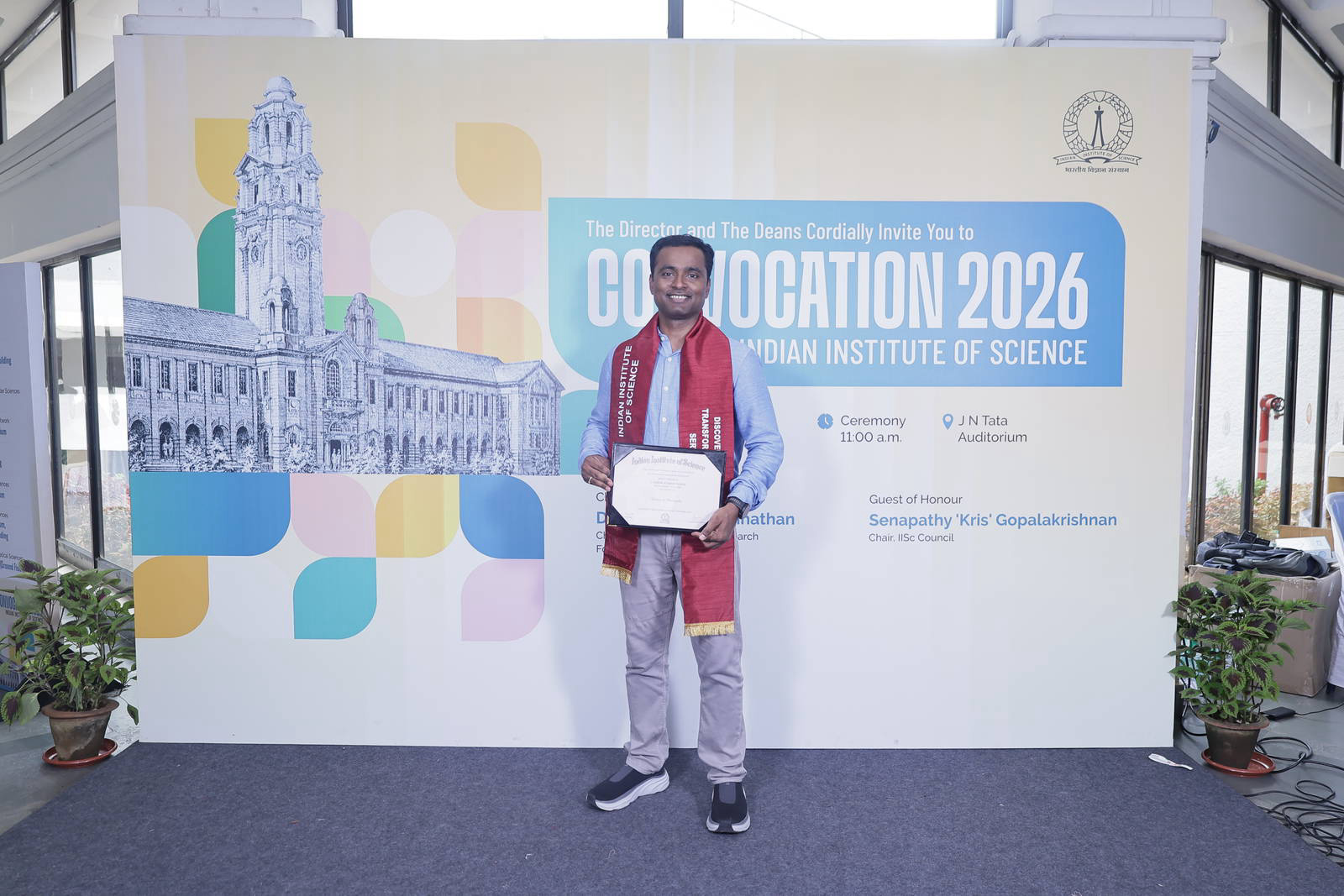
Ashok at Graduation
Ashok Kumar Reddy Chavva first used a landline phone at a boarding school. It was also where he learned to play football and first saw a computer. For a boy from a small village in southern India, it was where he began discovering how much there was to learn.
It was a government-run boarding school, Jawahar Navodaya Vidyalaya, that admitted children from rural areas on merit. Ashok wanted to go, and his parents supported his efforts to earn a place. He joined in 1992. The teachers, friendships and habits he found there would stay with him long after he left.
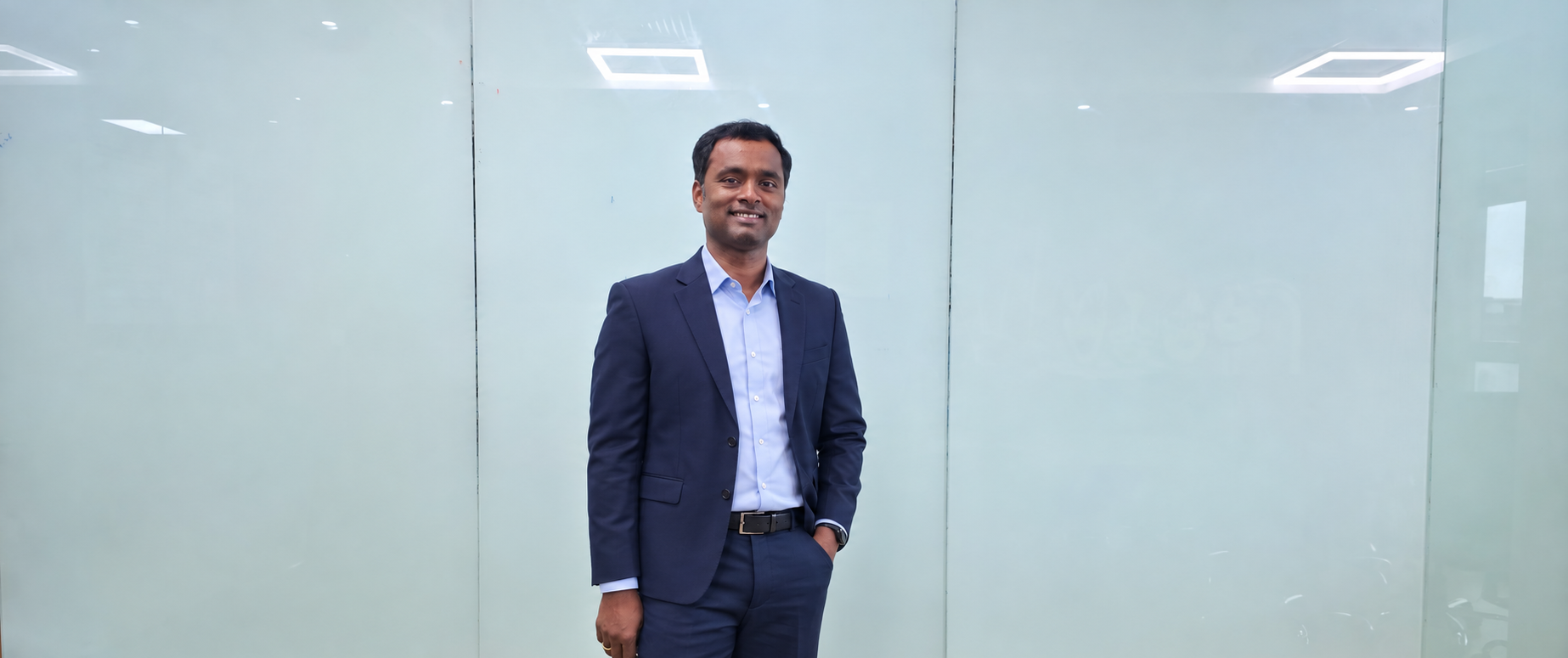
“More than any single subject, it gave me the sense that there was a much larger world to learn about and that it was open to me if I worked for it,” he says.
He went on to become the first engineer from his village.
His career in wireless communication would span several generations of mobile technology. Ashok contributed to the development of Samsung’s early 5G devices. Today, as Director and Principal Architect at Samsung R&D Institute Bangalore (SRI-B), he leads researchers and engineers developing the technologies behind future 6G communication systems.
Across that journey, the question that has held his attention remains practical: how do you take an idea and make it work in someone’s hands?
During his engineering degree, Ashok read widely about signal processing and communication, beyond his coursework. A professor who had studied at the Indian Institute of Science (IISc) spoke about it often enough to influence his next step. Ashok joined IISc for a master’s in telecommunications, where his advisor, Prof. K. V. S. Hari, helped deepen his understanding of communication systems.
He wanted to pursue a PhD, but decided to gain industry experience first and return to research later. In 2005, he began his career designing algorithms for early 4G systems. It was there that he learned how a modem comes together, from research through design to deployment.
At SRI-B, which he joined in 2013, one of his early assignments brought another lesson. He was working with a team made up largely of recent graduates to build a complete wireless receiver. They had to take it from algorithms to code running on a processor. None of the graduates had done it before.
Every part had to work. A gap in the team’s understanding would show up in the receiver performance, and the team had to work through each one. Several of those young graduates grew into excellent engineers. Watching them develop gave Ashok as much satisfaction as getting the receiver to work.
“It is probably where I first understood that building people is part of the job, not a side activity,” he says.
As his responsibilities grew, the wish to pursue a doctorate remained. Years after leaving IISc for his first job, SRI-B’s sponsorship gave him the opportunity to return to that ambition.
He completed his PhD in 2025 under Prof. Neelesh B. Mehta at IISc. Getting there meant finding time for research alongside work and family. For several years, he recalls, something was always waiting.
“What made it possible was the support of my managers and mentors at SRI-B, who backed the decision and kept backing it when it got difficult.”
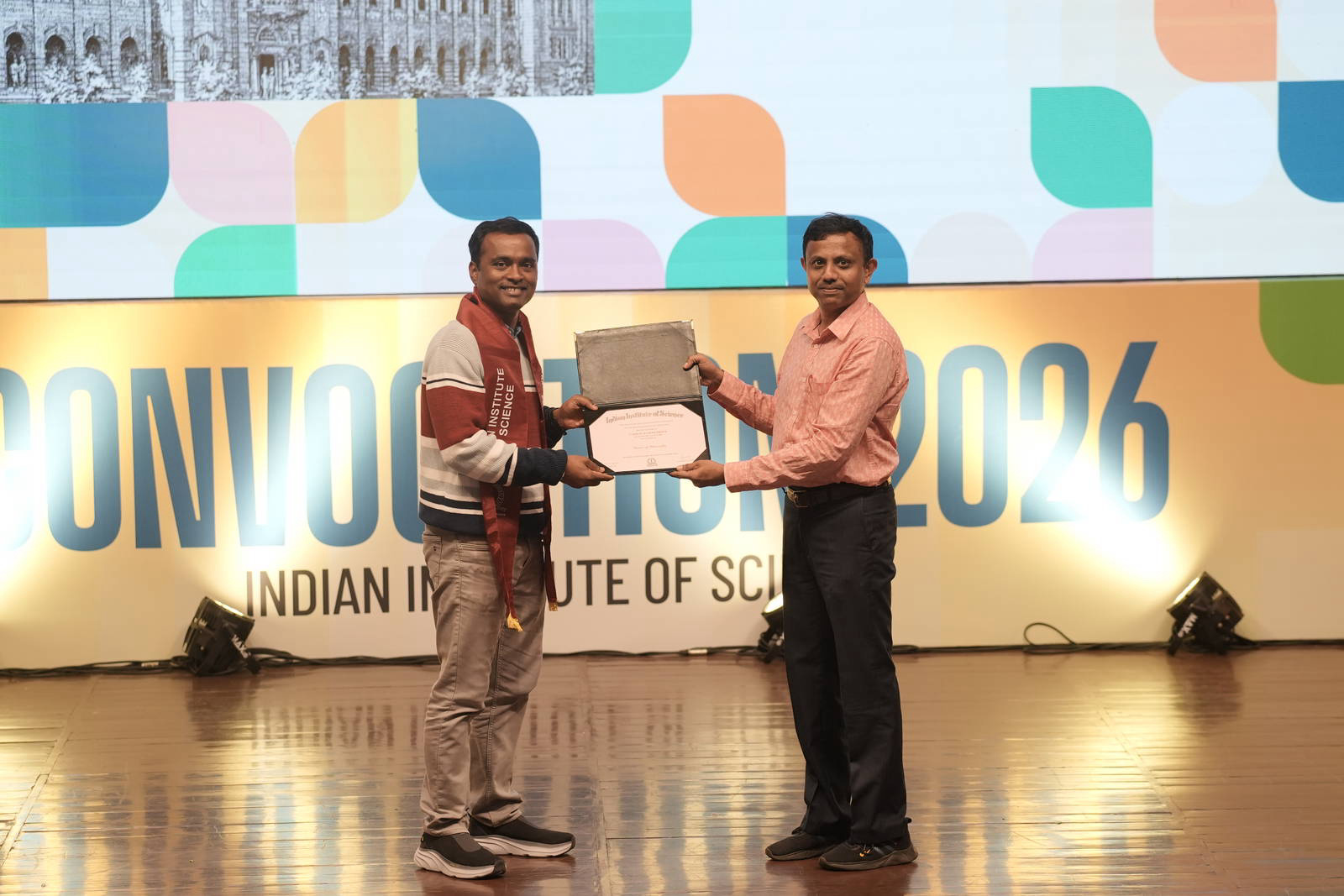
Ashok getting his PhD
His thesis explored how a phone could maintain a directional wireless connection as its user moved or turned the device. Using the phone’s motion and orientation sensors helped narrow the search needed to realign the beam. The research led to granted patents and publications. A long-held personal ambition had also opened a practical direction for his research.
That willingness to support an uncertain path has mattered throughout his time at SRI-B. His work on AI in wireless began with reports of connections failing as phones moved between network cells. The team asked whether AI could predict a failed handover between network cells early enough to do something about it. Field tests in 2016 and 2017 gave them encouraging results.
For Ashok, seeing a real network behave better made the possibility convincing. SRI-B had given the team room to investigate the idea before it had an obvious place in the standards agenda, and access to the field to test it.
“Being allowed to be early is not something every organisation offers,” he says.
Ashok credits Ratnakar Rao, his manager for much of his time at SRI-B, with trusting the team to tackle unproven ideas and sustaining that support when results were slow, giving him the confidence to plan research over years.
More recently, that patience has supported work on using AI to model how radio signals behave in real places. The team explored whether a vision model could interpret photographs well enough to help create those simulations. Early results were rough. SRI-B gave the researchers time to continue; when the approach began to work, it backed them with more computing resources and people.
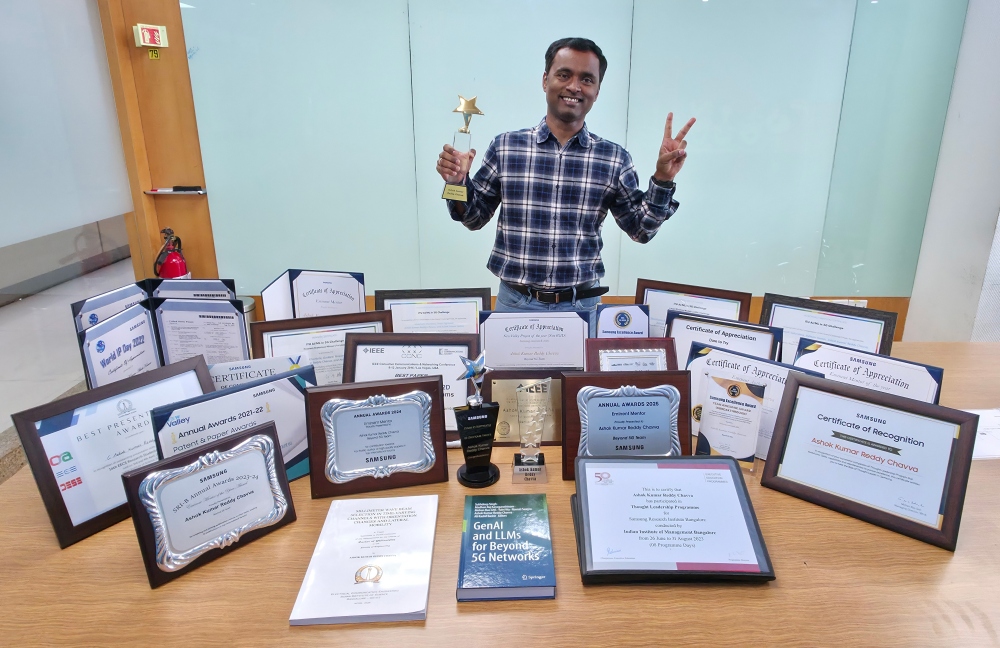
Ashok with trophies
Over the years, Ashok’s work has led to more than 270 patent filings, with over 100 granted across multiple countries. He has received Samsung awards including the CTO Award in 2018 and Eminent Mentor recognition in 2023, 2024 and 2025. An IEEE Senior Member since 2014, he has also published 67 research papers, cited over 700 times, and edited a book on generative AI for communications, contributing a chapter himself.
His approach to publishing reflects his approach to engineering. He wants the assumptions to resemble the conditions a device will actually encounter. A smaller improvement that holds up in practice matters more to him than an impressive result that depends on ideal conditions.
Today, his team is investigating how AI can be built into the foundations of wireless communication, so that devices and networks learn from their surroundings and adapt as conditions change. For users, that could mean a video call that stays steady on a moving train, or a longer battery life because the modem can identify opportunities to save power. Beyond the phone, he imagines a factory where robots coordinate over connections reliable enough for real-time decisions, and where a better understanding of how radio signals behave helps a robot anticipate weak coverage and plan around it.
As AI takes on more responsibility, he is particularly concerned with what happens when it meets conditions it has not learned to handle. The system needs a dependable fallback. Knowing when an approach might fail is part of making it useful.
He expects his own ideas to face the same scrutiny.
“I try to make it easy to disagree,” he says.
A colleague who has a suggestion should be able to test that argument through a simulation, a lab experiment or a mathematical analysis. He wants younger researchers to learn to defend their reasoning and develop the confidence to pursue a different answer. Some have become leaders themselves. In technical discussions, he still regularly finds that someone on the team has noticed an angle he missed.
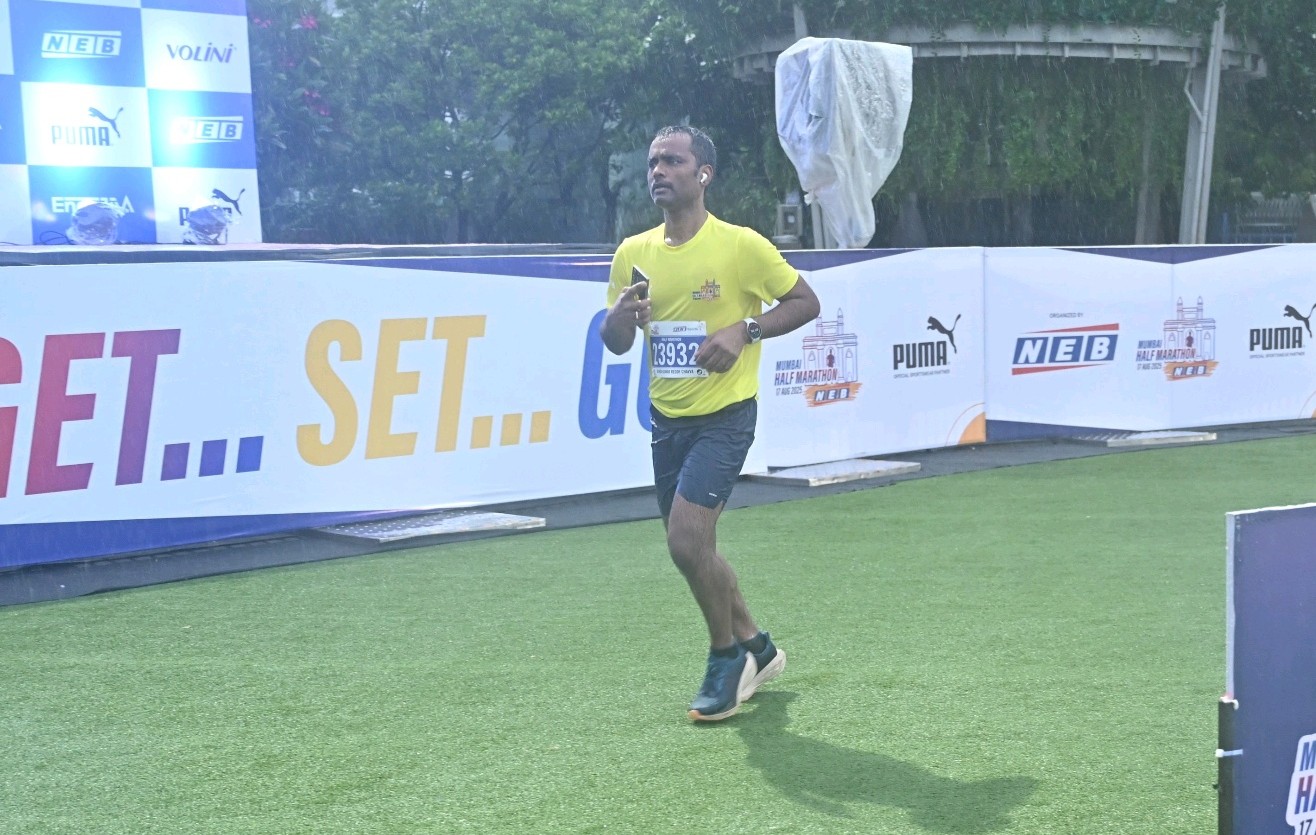
Running
Away from work, Ashok has found a rhythm he enjoys in distance running. After playing tennis and football, injuries led him to try something he found more peaceful. In the past year, he has completed half-marathons at the Mumbai Half Marathon, the Mysuru Marathon and the Bangalore Midnight Marathon. Running suits the way he thinks:
“long, steady effort with no shortcuts.”
His next goal is to contribute to next-generation 6G and AI research from Bangalore. His measure of success has changed. Early in his career, it was a working algorithm. Later, it was a complete system and a team capable of designing it.
“Now it is whether the people I work with can do the work without me,” he says. “Today, my team’s success is what makes me happy.”
The boy who found a larger world at school is now helping younger researchers find their own place in it. At SRI-B, where his own ambitions have been given time and support to grow, that has become one of the most rewarding parts of his work.